
Our trip to Central America involved viewing A LOT of Mayan ruins. There are tons of them! But to us, no experience was as spectacular and awe-inspiring as visiting Tikal.
Tikal is a UNESCO World Heritage Site and remains one of the most-visited attractions in Central America. It is located deep in the Peten jungle in Northern Guatemala.
The ruins here date back to the 1st Century when it was a city that housed up to 100,000 people. There are almost 3,000 structures within Tikal, but the best ones to visit are the Temple of the Great Jaguar and Temple IV, which stands tall at a whopping 70 meters.
And if you’re a movie buff, you may recognize it as the filming location for the Star Wars episode titled A New Hope! The site was also used for the James Bond movie Moonraker.
So, here’s a look at our experience visiting Tikal – what we did right and what we’d do differently if we get the chance to visit this UNESCO World Heritage site again!
Our experience visiting Tikal

We booked a sunrise guided tour that collected us from our accommodation in El Remate and brought us to Tikal. And we highly recommend doing this if you’re keen to avoid crowds (for the first few hours at least, you’ll have the place pretty much to yourself, as most tours get here for around 9 am).
It was a super-early wake-up call for us, which I’ll admit I wasn’t keen on. We were collected from our hotel around 3 am and were at the entrance gate to Tikal between 4 and 4:30 am.
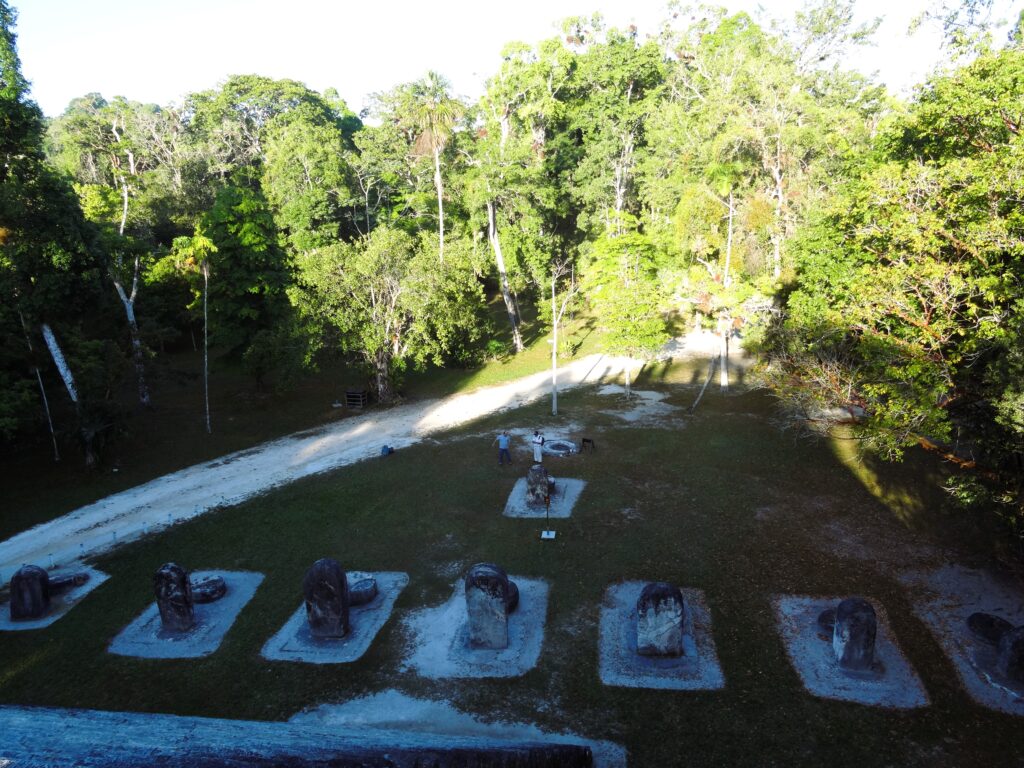
When we got in we headed straight for The Temple of the Double Headed Serpent (Temple IV) to catch the sunrise, which boasts the best view of the whole site as it’s the tallest pyramid here. And the sunrise really was magical.


After sunrise, we climbed back down Temple IV and headed for Temple V nearby, which is the second-tallest structure in Tikal. Then, we ticked off the other temples (Temple I, Temple II, and Temple III) before making a beeline for the Central Acropolis. And finally, we explored the North Acropolis, which is the most investigated section of Tikal (our guide told us that archaeologists are constantly learning more about Tikal through its exploration of the North Acropolis).
We really did learn so much about the Mayan culture from our local guide.
And what we thought was really cool about visiting Tikal is that you can climb to the top of most of the pyramids here, unlike in Chichen Itza and many other Mayan sites.
The Best Guided Tours of Tikal:
As you can guess, there are heaps of guided tours of Tikal to choose from. And I definitely do recommend doing a guided tour instead of doing it alone, as there’s so much ground to cover and so many structures to see. So, if you do it without a knowledgeable guide beside you, most of it will likely go over your head.
We really like the sound of this Tikal Ruins Day Tour – which starts from Flores but will pick you up in El Remate. It’s 7 hours long in total, and that includes a 4-hour guided tour of Tikal. We absolutely loved it, and it seems most other tourists did too, as it has a 4.5-star rating. It costs just $31 USD per person, which is a steal of a deal!
As you read above, we opted for the sunrise tour of Tikal – which we loved (despite the early wake-up call). Watching the sunset from the top of Temple IV was truly a bucket-list experience. The tour is 6 hours long and costs from $98 USD per person. It’s also a small-group tour (limited to 9 people). But, remember your pick up time for this tour is likely going to be around 3 am – getting you to the entry gates for 4 am.
A few other awesome tours of Tikal:
What is the history of Tikal?

Tikal was a vibrant city that thrived from approximately 400 BC to 1,000 AD. Its history is marked by its rise as a powerful city-state during the Classic Period, between 200 and 900 AD, when it was an important political, economic, and military hub.
The city was adorned with towering pyramids, grand temples, and expansive plazas, reflecting the advanced architectural and astronomical skills of the Maya. Tikal’s influence extended throughout the Maya region.
However, like many other Maya cities, Tikal eventually fell into decline around the 10th century, likely due to a combination of factors such as environmental stress, resource depletion, and internal conflict.
Today, Tikal stands as a UNESCO World Heritage site, offering invaluable insights into the sophistication and complexity of Maya civilization.


How much time do you need in Tikal?
I would say that one full day (around 7 – 10 hours) is enough time for most people to see Tikal. However, if you’re super-interested in Mayan history and/or want to see all of the huge site, then our guide told us that 3 days is a reasonable amount of time for Tikal.
Can you do Tikal without a guided tour?

Yes, you can do Tikal without a guided tour. And even though we opted to do a guided tour, we met many people who made their own way here on public transport.
From Flores, you can book a shuttle bus with Adrenalina Tours to Tikal, which costs from $15 USD per person, and there are three departure times each morning (6 am, 7:45 am, and 10 am). It leaves from the I Love Peten sign at the entrance to Flores.
From Santa Elena (near Flores), a direct bus operates to Tikal three times a day. While if you are staying in El Remate (like we were), you will need to pre-book a taxi to take you to the ruins. This should set you back around 150 GTQ ($20 USD).
💡 You can purchase your entry ticket to Tikal at the entrance, and this costs around $20 USD per adult (150 GTQ). Children under 12 are free. You can also buy tickets for Tikal online here. It’s also worth noting that you can visit for sunrise or sunset without a tour guide – you must buy an additional ticket option if you wish to do this – it costs 100 GTQ (around $13 USD) per adult.
What is the best time to visit Tikal?

I would say that the best time to visit Tikal is during the dry season, which typically runs from late November to early April. We visited in February, and for us, it was ideal. These months offer more predictable weather with less rainfall, and you can avoid the intense heat and humidity that characterize the rainy season (from May to October).
If you’re keen for a quieter experience with fewer tourists, consider visiting in the shoulder months of November and April. This way, you can enjoy the awe-inspiring pyramids, temples, and wildlife of Tikal without the peak season crowds.
What is there to see at Tikal?
Temple I – aka the Temple of the Great Jaguar
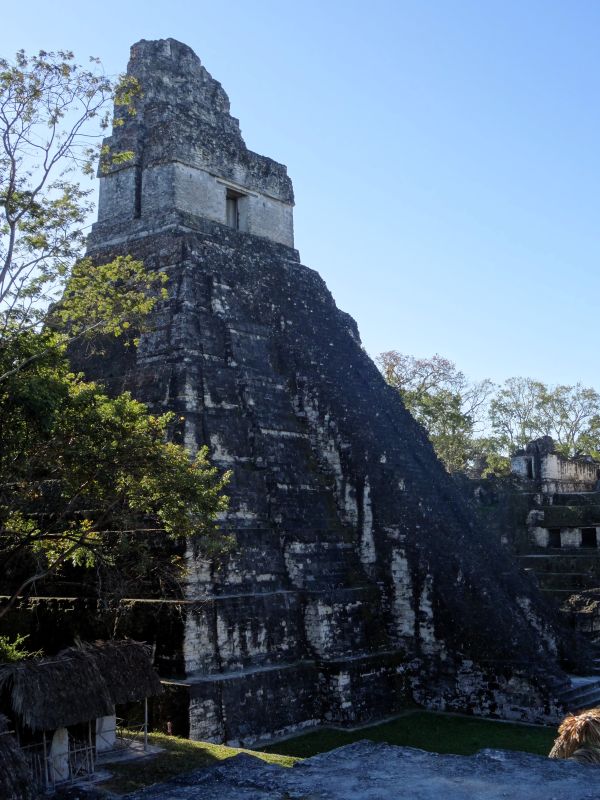
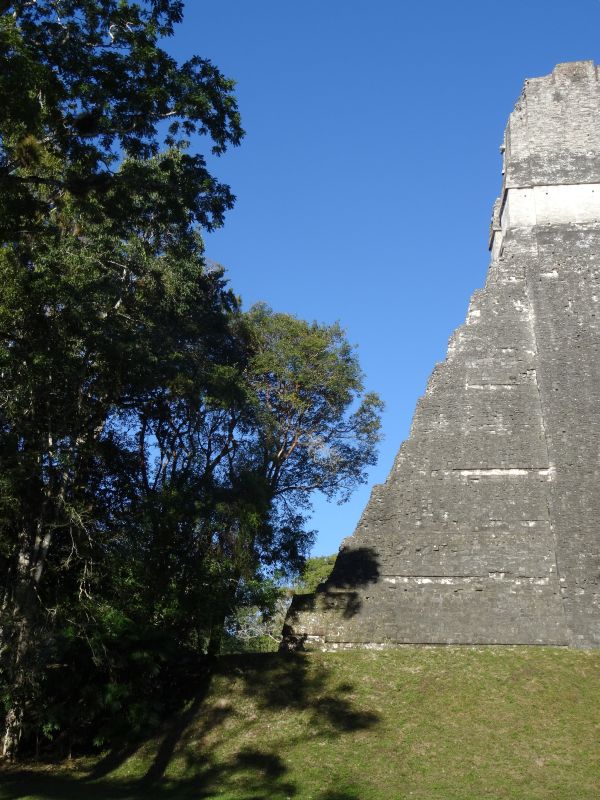
This iconic pyramid, soaring approximately 47 meters (154 feet) into the sky, is a testament to the grandeur and sophistication of the Maya civilization. Constructed in the 8th century AD during the reign of the powerful ruler Jasaw Chan K’awiil I, the temple served as his mausoleum and a place of ceremonial significance. Its steep, stepped sides lead to a small shrine at the top, where important rituals and offerings were likely performed.
Temple II – aka the Temple of the Masks

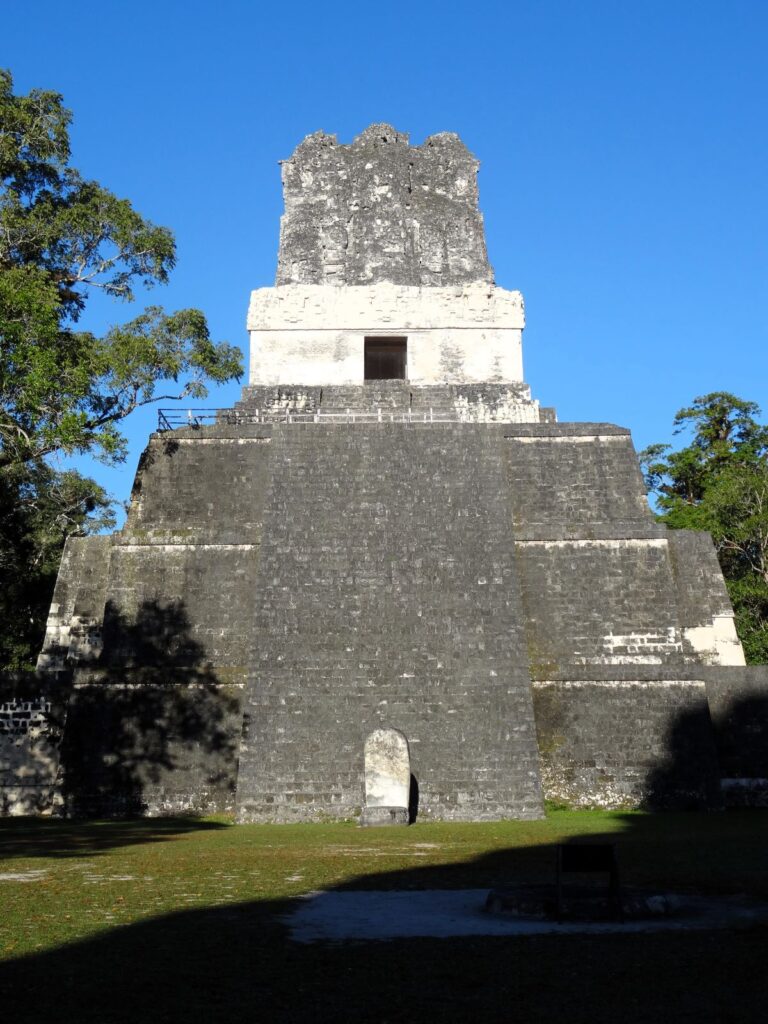
This temple gets its name from the intricate stone masks that adorn its façade, believed to represent deities or important figures in Maya mythology. Standing approximately 38 meters tall, it offers stunning views of the surrounding jungle and the other majestic structures of Tikal. It is located opposite Temple I.
The temple served as a funerary monument, likely built to honor and house the remains of Lady Kalajuun Une’ Mo’, the wife of Jasaw Chan K’awiil I, one of Tikal’s most celebrated rulers.
Temple IV – Temple of the Double Headed Serpent

Built around 741 AD during the reign of Yik’in Chan K’awiil, Temple IV reaches approximately 70 meters (230 feet) in height, making it one of the tallest pre-Columbian structures in the Americas. It served as both a temple and a monument to commemorate the achievements of the city and its rulers. The temple offers breathtaking views of the surrounding rainforest and other structures within Tikal. And it’s where we caught the sunrise from.
Temple V
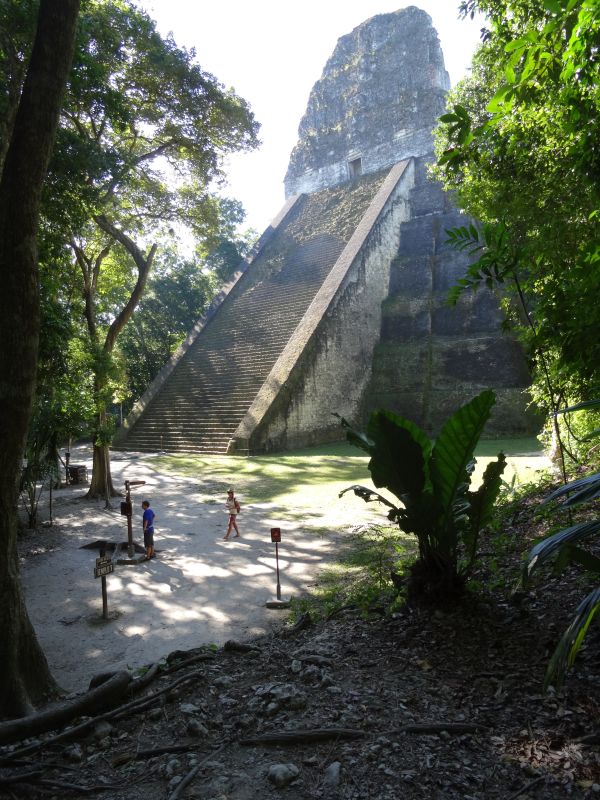
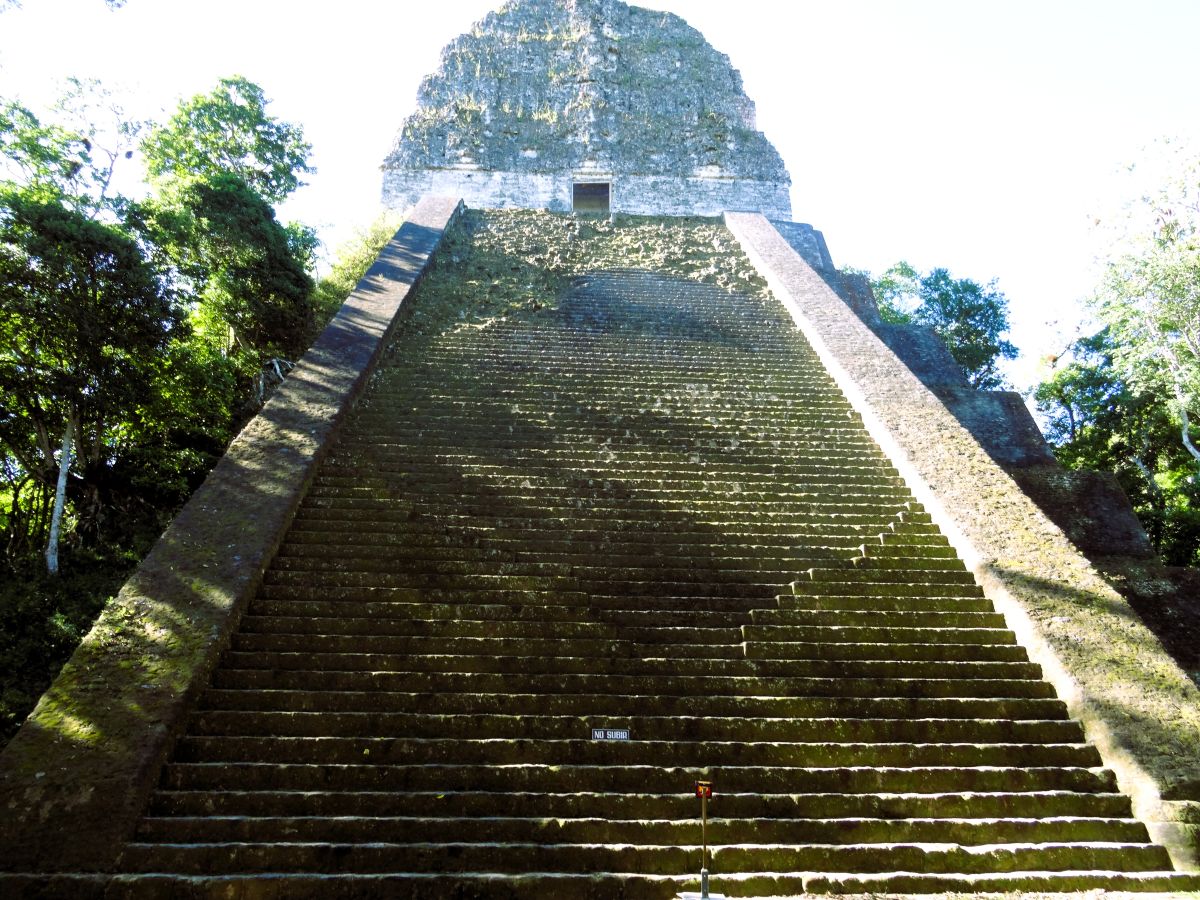
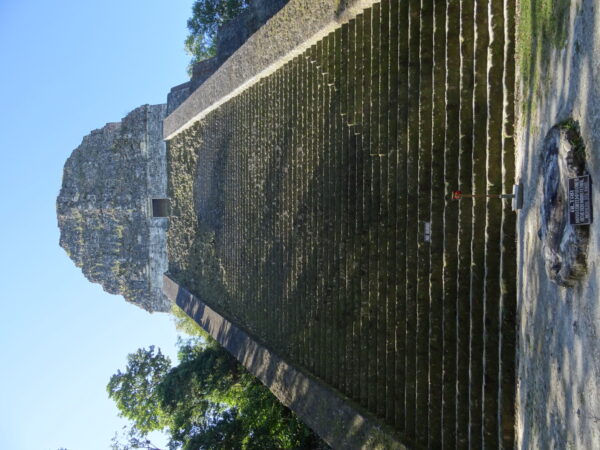
Temple V stands at around 187 feet (57 meters), making it the second tallest structure in Tikal, only surpassed by Temple IV. It has a super-steep staircase, too.
It was built during the Late Classic period, around 700 AD, Temple V is believed to have been a funerary temple, possibly dedicated to a prominent ruler, though the identity of the ruler remains unknown.
The Lost World

This is part of a larger complex that served as a ceremonial and astronomical center during the height of the Maya civilization. The Lost World complex, which includes the Great Pyramid, traces its origins back to the Preclassic period around 500 BCE, making it one of the oldest parts of Tikal.
The Central Acropolis

This sprawling complex served as a residential and administrative hub for the city’s elite during its peak from around 200 to 900 AD. It comprises of numerous interconnected structures, including palaces, courtyards, and ceremonial platforms.
The North Acropolis

The North Acropolis served as a ceremonial and burial complex and is particularly noted for its series of temples and pyramids that were constructed over centuries, with each new generation adding layers to the existing structures, thus creating a multi-tiered architectural marvel. The site is adorned with intricately carved stelae and altars that depict rulers and deities.
Palace of the Grooves

This structure, like many in Tikal, is noted for its impressive stonework and intricate stucco decorations, which were likely used to display the power and influence of the city’s rulers. The palace’s function is thought to have been both residential and administrative, serving as a hub for the elite of Maya society
Temple III – also called the Temple of the Jaguar Priest

I’ve included it last here as it’s very hard to reach – it’s hidden deep in the jungle. And so, it hasn’t been fully excavated (yet).
You can spy the top of it from Temple IV – and it’s approx. 55 meters tall and is believed to have been built in the 8th Century.
What wildlife will I see here?


You may encounter howler monkeys with their distinctive roars echoing through the trees here (we did!), and spider monkeys swinging gracefully among the branches. There are also over 300 bird species living in the park, including the striking keel-billed toucan and the ocellated turkey. You might spot the Morelet’s crocodile basking by the water’s edge or various colorful species of lizards and snakes.
Our tips for visiting Tikal:
- Tikal is open from 6 am to 5 pm. If you buy a ticket after 3 pm – you can also come back and visit the next day for free.
- Tickets for Tikal cost around $20 USD per adult (150 GTQ). Children under 12 are free. For sunrise or sunset here – you must buy an additional ticket option if you wish to do this – it costs 100 GTQ (around $13 USD) per adult.
- Pack enough bottled drinking water and sunscreen. Tikal has a tropical climate similar to that of Mexico’s Yucatan Peninsula.
- There are also no ATMs in Tikal, so make sure to bring enough cash with you.
- Avoid visiting on Sunday, if you can, as Guatemalan citizens can enter for free on Sundays.
Where to Stay for Tikal:

After spending two weeks in Guatemala, we decided to use El Remate as our base to explore Tikal instead of the more popular (and busier) town of Flores. And we don’t regret our decision one bit, we were able to chill out by gorgeous Lake Peten Itza one day, and the next day we got up early for our tour to Tikal. El Remate is also only 40 minutes from Tikal, whereas Flores is around 1.5 hours away.
In El Remate, we stayed at one of the most unique and memorable hotels we’ve ever had the pleasure of staying at. Posada del Cerro is designed like a treehouse, overlooking Lake Peten Itza. It looked like it had been constructed by Mother Nature herself. We stayed in a suite, which was essentially a massive balcony with a bed and the best view of the lake. There was no door to the suite, and the bed was simply covered by a massive mosquito net to keep the bugs away.
In Flores, Hotel Casona de la Isla is a great option. It’s a resort-style property with a lovely outdoor pool that overlooks Lake Peten.
Or if you want to stay inside the park, luckily, the Jungle Lodge is located here – this unique lodge offers lots of different options and has a gorgeous outdoor pool. If we return, we will definitely stay here within the park! It’s very popular – so book this one in advance!
Getting to Tikal
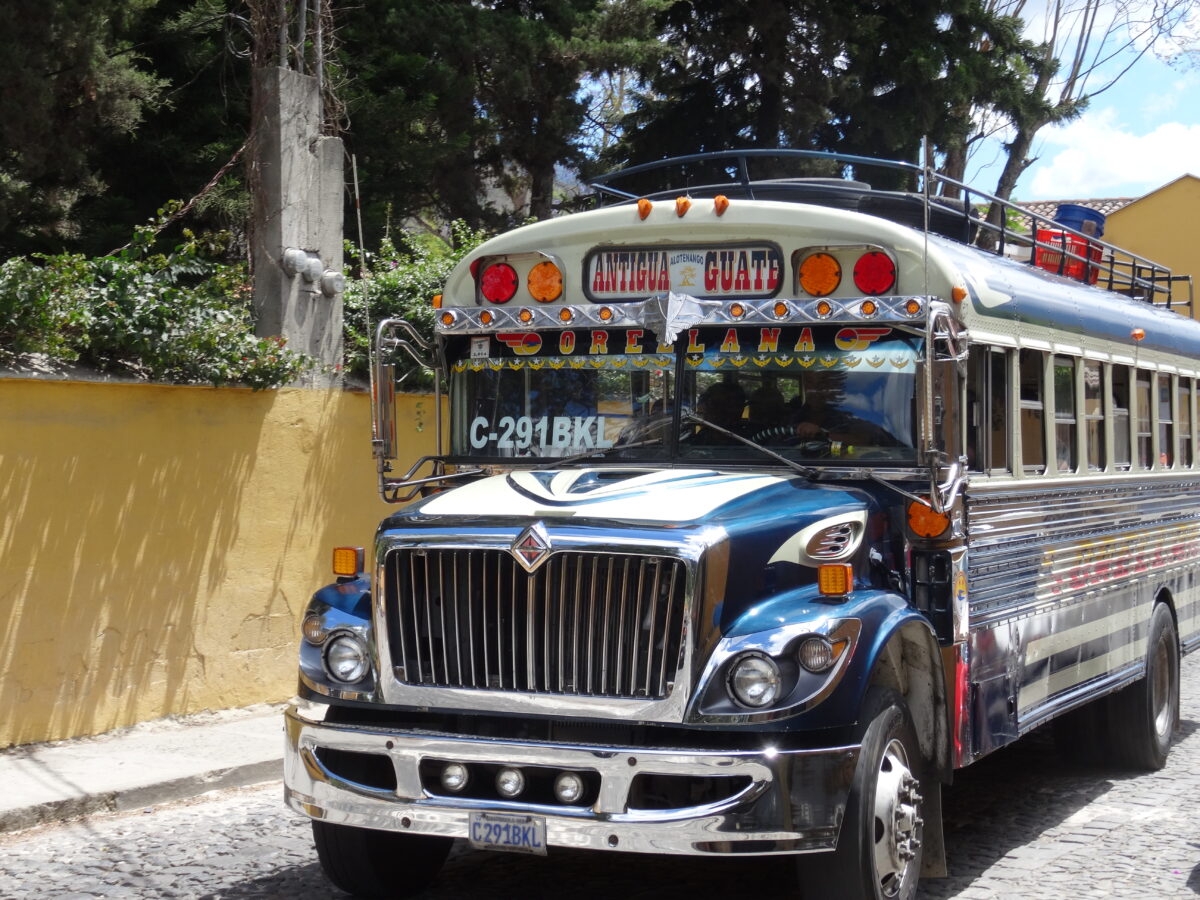
There is a small airport in Flores offering mostly domestic flights. And thus, many overseas visitors who fly into Guatemala City will catch a connecting flight to Flores Airport. This flight, one-way, typically costs around $125 USD one-way. And it may be a better option for you than catching a bus to Flores from Guatemala City, as this will take a whopping 9 hours.
And FYI, we always use Skyscanner for booking our flights.
From other parts of Guatemala (Lake Atitlan, Antigua, etc.), your best option is to catch a bus to Flores and from there hop on the shuttle to Tikal (or book a guided tour to bring you from Flores to Tikal).
What to Pack for visiting Tikal:
- I wore my Teva Hurricane Sandals here; they are so comfortable and have sturdy soles. And if you’re going to be hiking in the jungle/ spending longer here, then these Acrus boots from ArcTeryx are brilliantly rated, and they’re made from super material GORETEX.
- Comfortable, loose pants – I wish I’d worn my Sweaty Betty modal wide leg pants here instead of shorts.
- Sunscreen and insect repellent is also a must!
- An eSIM, if you’re coming to Central America for longer than two weeks then getting an eSIM may come in handy. As that way, you won’t need to change your number or remove the physical SIM from your phone. They are so handy and cheap, too.
- Travel insurance is also a must when traveling around Guatemala – Travel insurance will provide you with coverage for a range of situations in Guatemala, including flight delays, canceled flights, injuries, illnesses, etc.
Thanks for Reading!
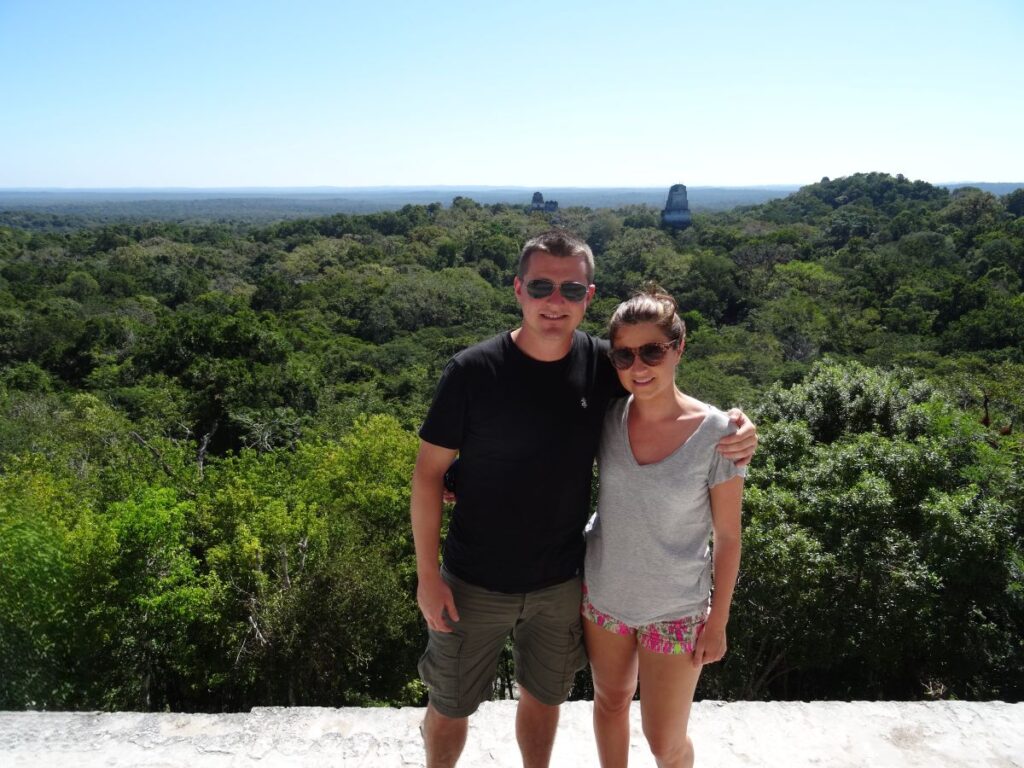
I hope you enjoyed reading our guide to this ancient Mayan city nestled in the heart of Guatemala’s dense jungle. Tikal truly is a mind-blowing place; you’ll feel like you’re in a movie as you wander around the temples and through the lush jungle. We are looking forward to returning one day with our daughters.
Tell me – what did you think of our blog post on visiting Tikal? I’d love to read your thoughts in the comment section below.
You may also enjoy reading –
How To Spend 3 Days in Palenque, Mexico
Best Things to Do in Bacalar, Mexico
3 Weeks in El Salvador Itinerary
PIN THIS:

Last Updated on October 14, 2025 by snaphappytravel