
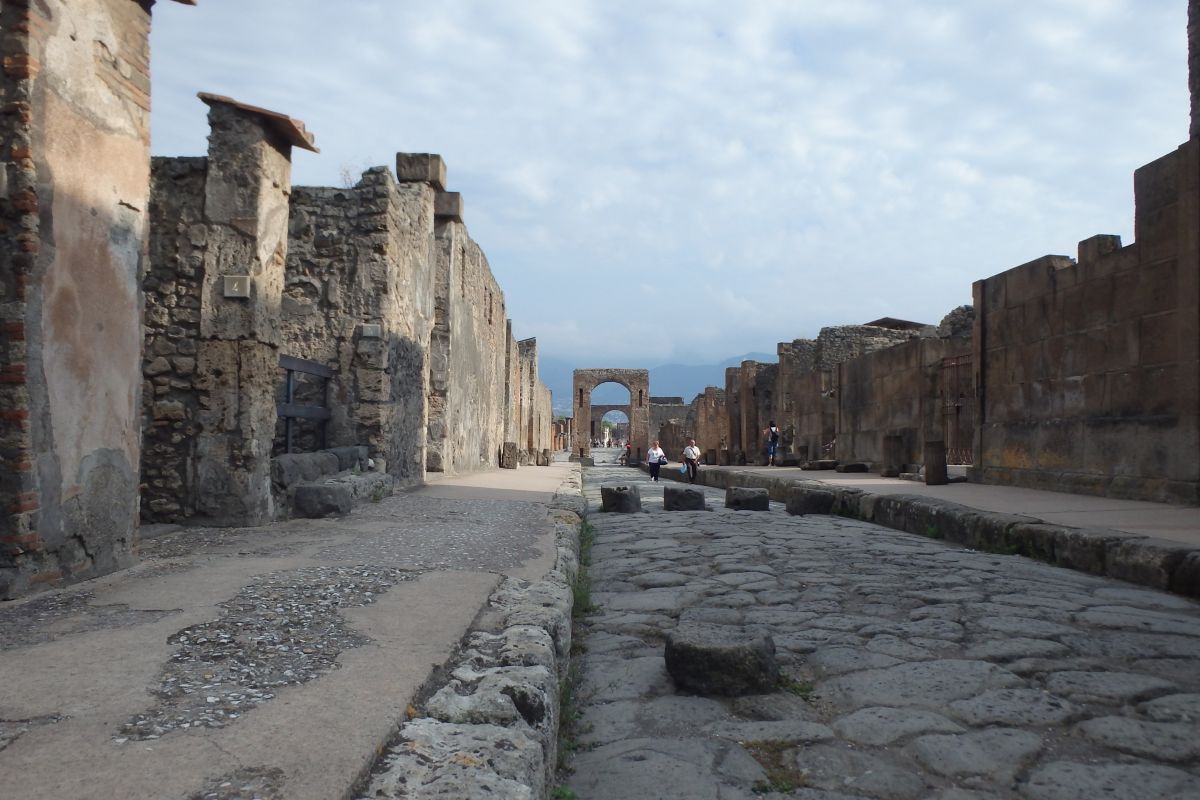
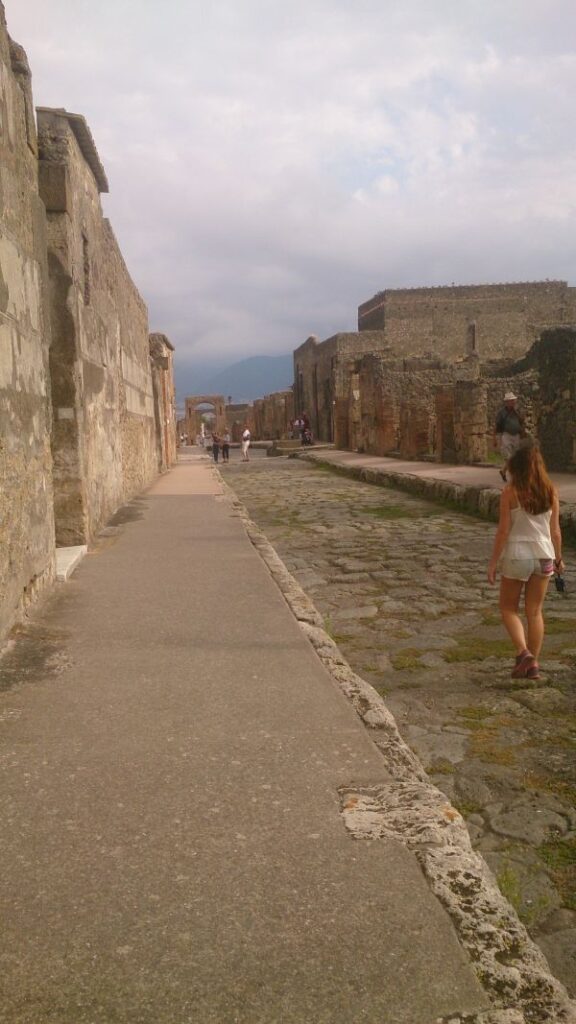
Way back in the year 79 A.D., a huge volcanic eruption wiped out the city of Pompeii in Italy (close to the current-day city of Naples). Pompeii is one of the most important historic and archaeological sites in Italy, and as it turns out, it’s one of my favorite historic sites in Europe. It’s amazingly well-preserved (thanks to the ash from the eruption) – it’s almost as if it’s been frozen in time.
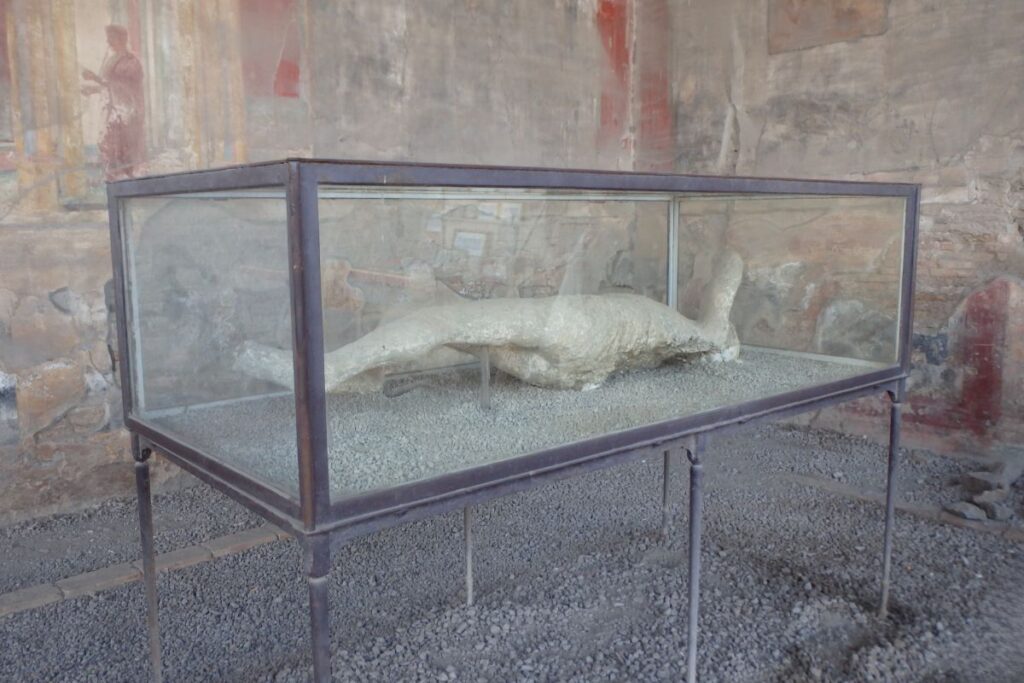
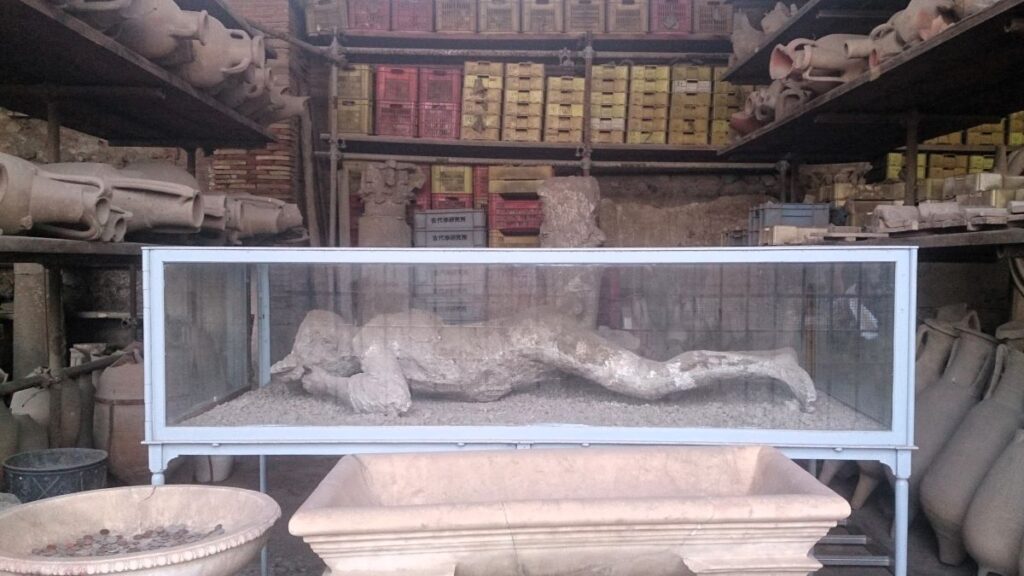
On your visit here, you will see bodies encased in ash stuck in positions to protect themselves from the eruption. Bodies rolled up in a ball, bodies with their hands outstretched as if to stop the oncoming lava. There are even dogs in these same positions. It’s astounding that 2,000 years later, we can witness Pompeii in almost pristine condition. It is honestly like a movie set.
It’s no surprise then that Pompeii is such a popular tourist attraction; would you believe that no less than 2.5 million tourists visit here every year?
So, let’s get started – in this blog post, I will guide you through exactly what you can expect when visiting Pompeii.
Why visit Pompeii?

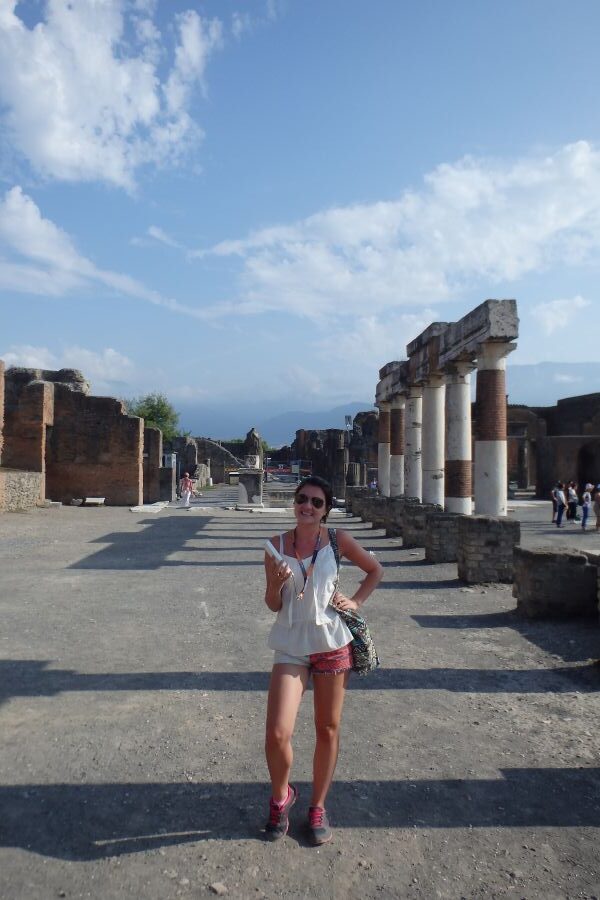
We’ve visited Pompeii twice now – the first time with a local guide, and on our second visit, we decided to DIY it as we were already fairly familiar with the site.
And honestly, Pompeii never fails to impress me – I struggle to get my head around how the site is so well-preserved. It almost feels like you’ve hopped into a time machine and are stepping foot into the same city from thousands of years ago. It’s that well-preserved.
You see, the volcanic eruption buried the city under a thick layer of volcanic ash and pumice. This sudden and deep burial helped to create a time capsule, protecting the city from the natural elements and human interference for hundreds of years. The ash sealed the buildings, artifacts, and even the bodies of the locals. And the lack of air and moisture under the ash helped to preserve structures, frescoes, and everyday items.

What is the best way to visit Pompeii?
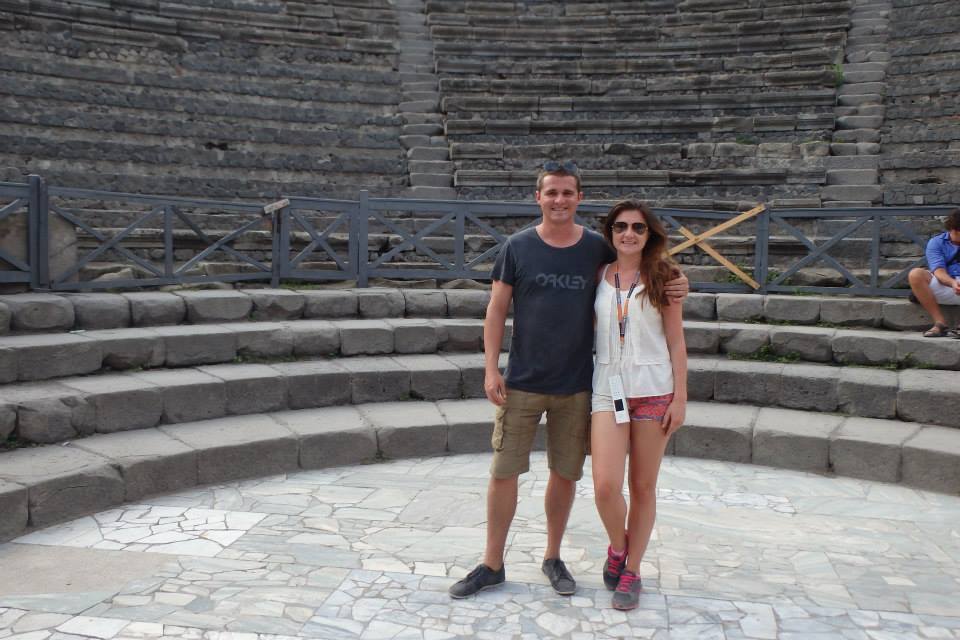
I would suggest hiring a guide to explore Pompeii, as I can attest that it’s quite an overwhelming experience. And having a knowledgeable guide on hand will enhance your visit by providing context and insights that might not be obvious to you.
Our guide was great – he told us the history, personal stories, and detailed explanations about the events that took place. This really helped us to better understand what happened when Mt Vesuvius erupted and what Pompeii was like before the eruption.
And I also found it helpful to have someone knowledgeable on hand to answer any questions I had.
Can you just show up to Pompeii?
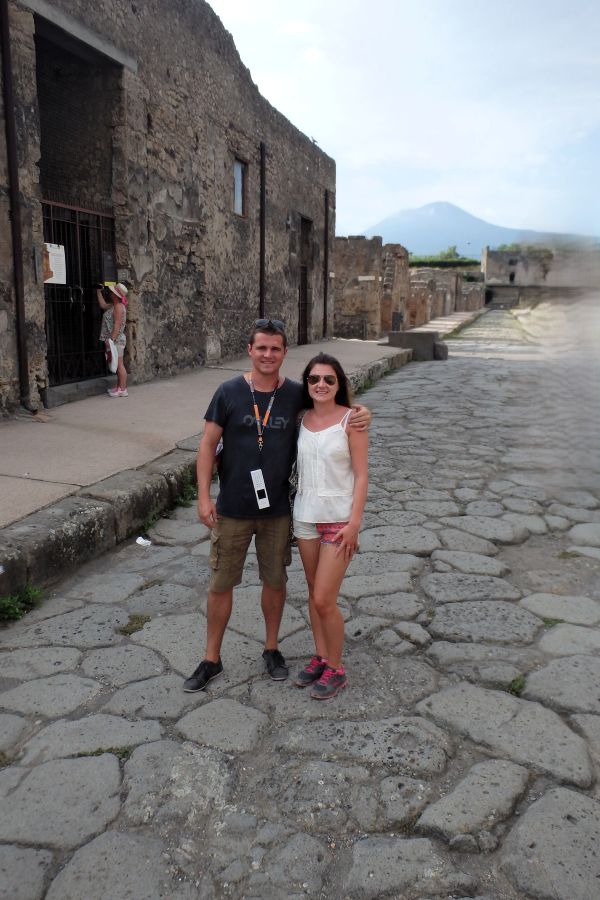
Yes, you can show up to Pompeii and get your tickets at the gate, but I don’t advise doing this during the busy summer months, as you will likely be queuing for ages, and even then, you may not get in as the site may already be at its limit. So, your best bet is to pre-book your ticket online in advance.
Also, be wary of ticket sellers at the gate; you should only buy your in-person tickets from the official ticket offices located near the entrances (Porta Marina, Piazza Anfiteatro, and Piazza Esedra).
It’s also worth noting that, as of 2025, Pompeii has put in place daily visitor restrictions to help preserve the site (a great and necessary implementation)
Between 9 am and 1 pm, a maximum of 15,000 visitors are allowed, and between 1 pm and 5:30 pm, just 5,000 visitors are allowed.
Best guided tours of Pompeii:
This is one of my favorite tours I’ve done in Italy – a day trip to Pompeii and Mt. Vesuvius from Naples. Although we like to DIY most things on our travels, we opted to do a guided tour of Pompeii as it meant we could fully relax without having to worry about transport or pre-booking tickets.
It included just over two hours at Pompeii, and our guide was really knowledgeable. The tour costs 116 euros per person and includes return transfers from Naples.
After, we traveled up the slopes of the Mt Vesuvius by 4×4 vehicle. We did have to hike some of the way as the vehicle couldn’t go completely to the top. It was really cool to see the crater of Mount Vesuvius up close.
If you just want to see Pompeii (not Mt Vesuvius), then this tour of Pompeii with an archaeologist is a very cool experience; you will learn so much! It costs from 53 euros per person and lasts up to 5 hours. This one doesn’t include pick-up from Naples, so you will need to make your own way here.
Can you visit Pompeii without a tour?
Yes, you can visit Pompeii without a tour, but my top tips if you want to do this are to pre-book your tickets online in advance and start at the back of the site and slowly make your way back towards the main entrance gate. This way, you’ll avoid the bulk of the crowds.
Just make sure you don’t rush it and allow at least 5 hours to see it all!
What should I know before going to Pompeii?
- Buy your tickets in advance – Depending on the time of the year you plan to visit (June through August is the high season), I recommend booking your tickets or your guided tour at least a month out.
- Each attraction here has its own opening and closing times, and some may close around an hour before the official closing time.
- Bring water – especially if you plan to visit in the summer, like we did. It got super-hot when we were there, and there were limited places to buy refreshments.
- Wear sensible footwear – The ground here is made up of cobblestoned and uneven paths, and the site is also huge, so be sure to wear comfortable, closed-toe shoes.
Best sights to see in Pompeii:
The Forum
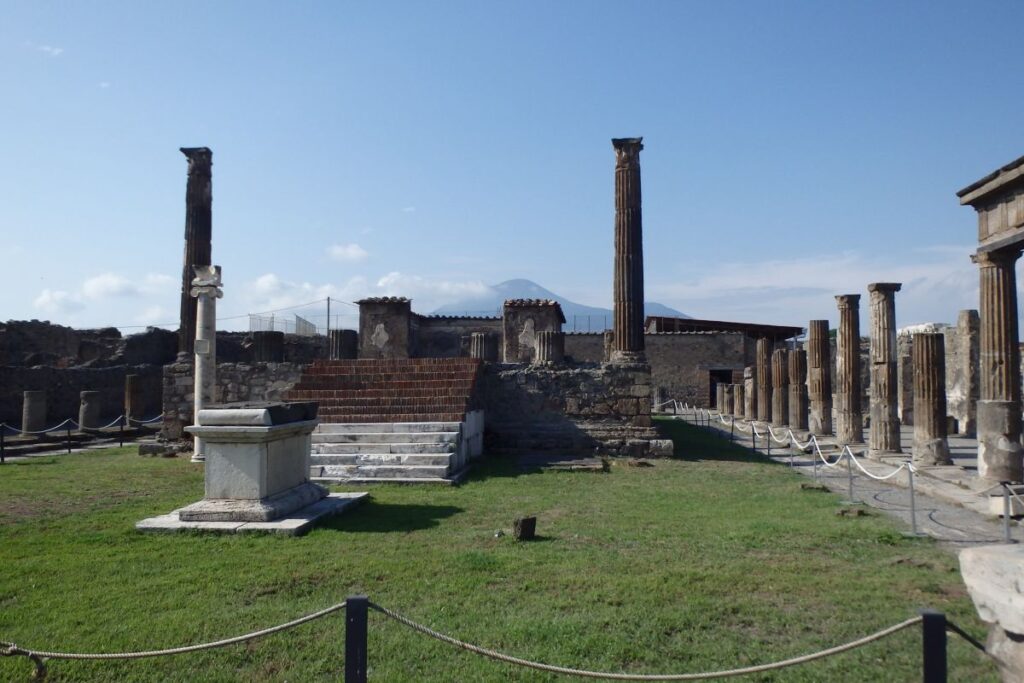
This is where you’ll likely come across the biggest crowds at Pompeii, as it’s located next to the main gate. The Forum was essentially the main square of Pompeii, and it is here that any major events would have taken place.
The Amphitheater
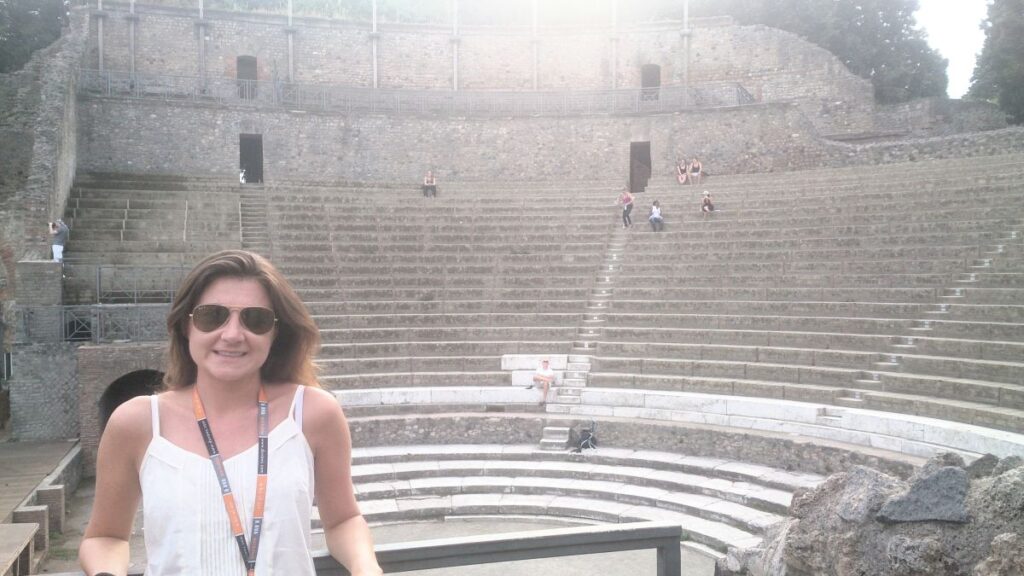
This is one of the oldest Roman amphitheaters in existence, it’s exceptionally well-preserved and showcases the grandeur of ancient entertainment venues.
The House of the Faun
This is a sprawling villa famed for its stunning mosaics, including the renowned “Alexander Mosaic.”
The Villa of the Mysteries
The Villa is located just outside the city walls and boasts intricate frescoes depicting mysterious religious rites.
Stabian Baths
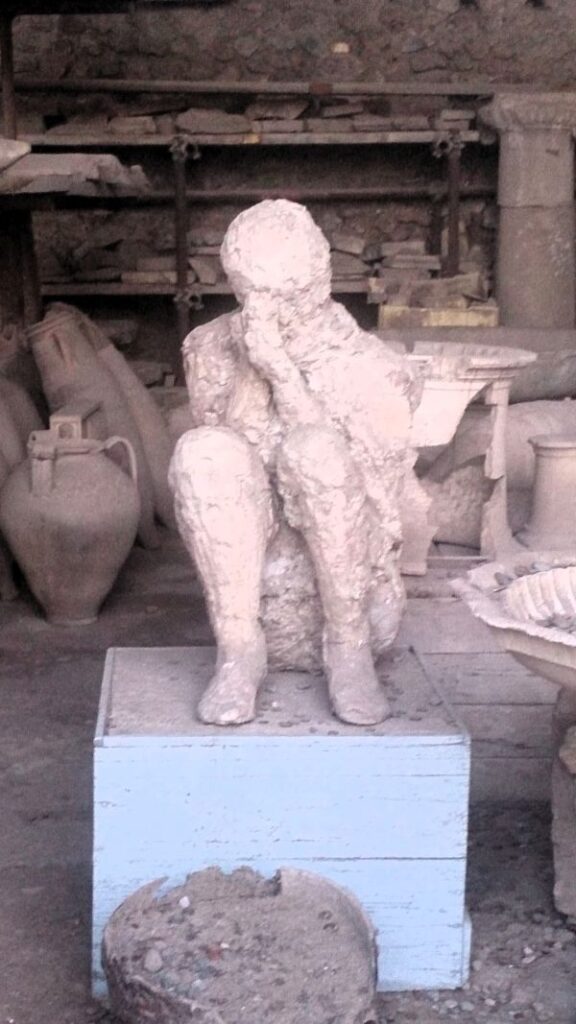
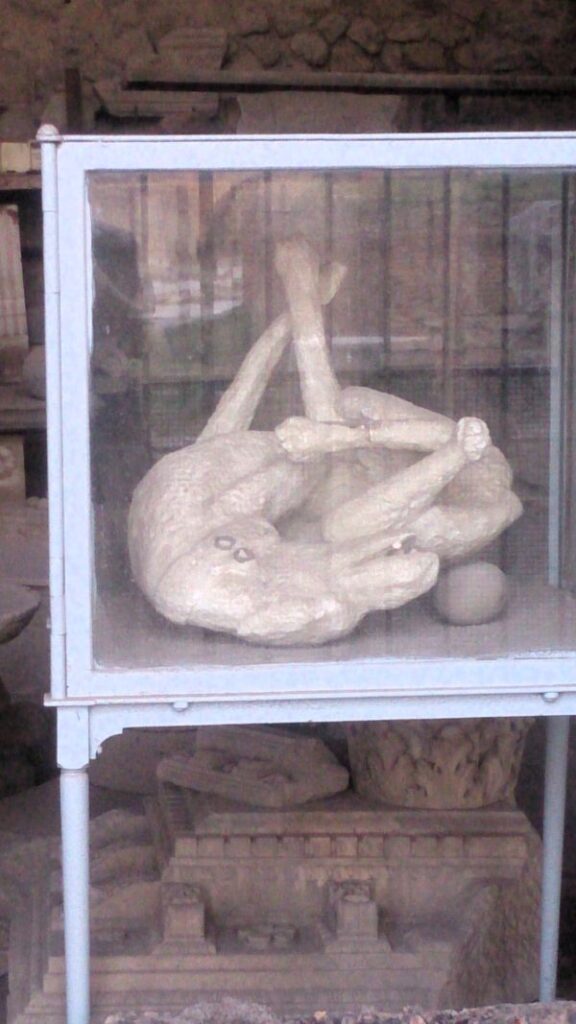
The casts of the victims at the Stabian Baths can be quite shocking at first, frozen in the positions they were in at the time of the eruption, they offer a poignant reminder of the human tragedy that unfolded here.
The Brothel
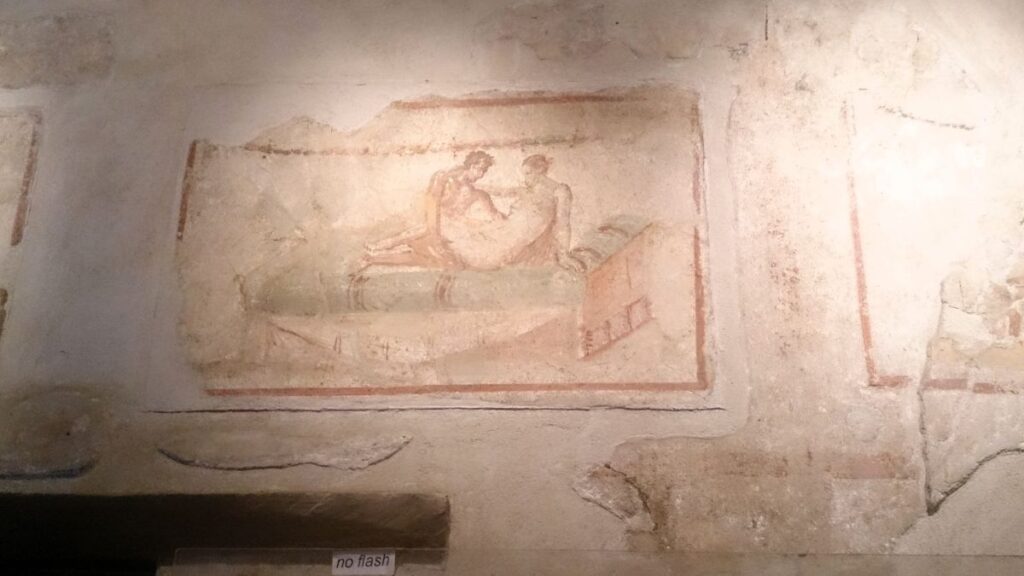
Also known as the Lupanar, this is one of the most-visited buildings in Pompeii. It’s also one of the best-preserved spots here. This two-story building had small rooms with stone beds and some pretty eye-catching frescoes of erotic scenes. Plus, the graffiti on the walls tells us a lot about the sexual habits of the visitors back then. It shows just how open the Romans were about sexuality
The Forum Baths
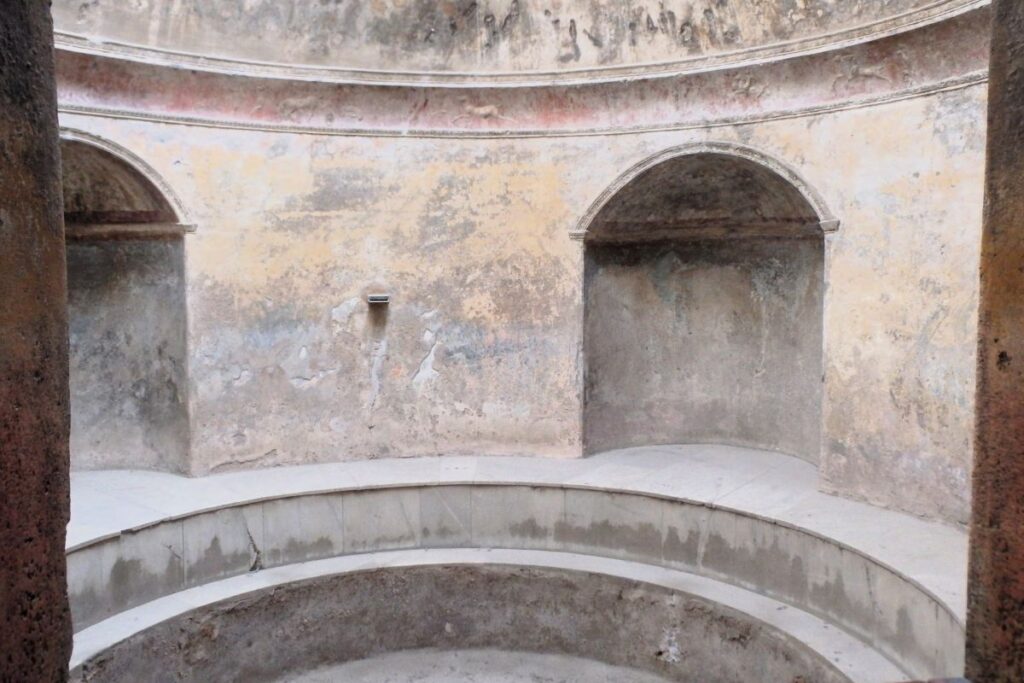
These are believed to have been built around 80 BCE, and are conveniently located near the Forum, the city’s bustling hub. The baths had separate areas for men and women, each with rooms of different temperatures: the cold frigidarium, the warm tepidarium, and the hot caldarium. Thanks to the clever hypocaust system, an early version of underfloor heating, Romans could keep the bath temperatures just right.
The Great Palestra
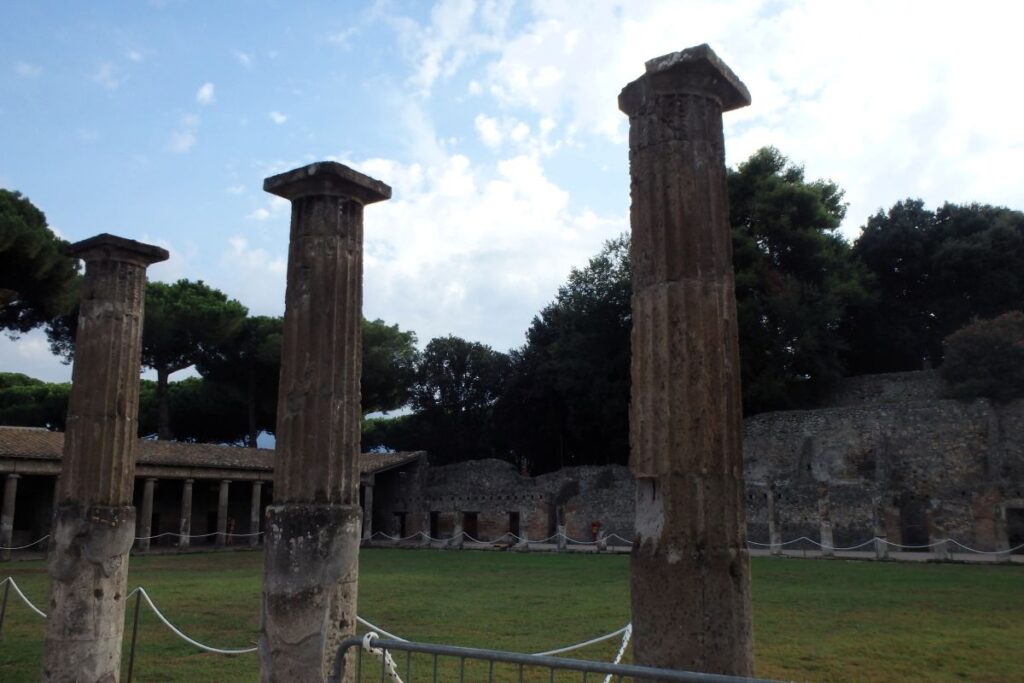
This big, open-air gym, close to the amphitheater, was the go-to spot for working out and hanging out in Pompeii. It covered around 140 by 130 meters and had colonnades all around, plus a big swimming pool in the middle, showing how much the Romans loved fitness and fun. Young men in Pompeii would come here to do all kinds of athletic stuff, which was a big part of their schooling and military prep. It also hosted public events and get-togethers.
What is the best month to visit Pompeii?
I would say that the best months to visit Pompeii are April, May, and October. You’ll get mild and pleasant weather, perfect for exploring the ancient ruins without enduring the scorching summer heat or the winter cold. Plus, it means you can dodge the peak tourist crowds of summer.
Getting to Pompeii

Naples is the closest city to Pompeii at 27 km away (around a 30-minute drive).
By train is the easiest way to visit Pompeii from Naples. Catch the Sorrento Circumvesuviana train from Naples and hop off at Pompei Scavi – Villa Dei Misteri station. The train journey takes around 40 minutes, and from what I remember, it cost us 3.50 euros each way.
Where to Stay for Pompeii
We stayed in Naples to visit Pompeii – at the Villa Elisio Hotel a casual 3-star hotel set in a 1700s building. The rooms are clean and comfortable, and the location is great, just a short walk to the National Archaelogical Museum. There’s a lovely courtyard in the center of the hotel, too.
If you want to stay closer, then Residence O’Sole Mio Pompei is an excellent option as it’s just over a km away from the Pompeii ruins. They have a lovely outdoor pool, and the rooms look bright and airy.
FAQs
What are the opening hours?
In peak season (April 1st to October 31st), Pompeii is open from 9 am – 7 pm. In low season (November 1st to March 31st), Pompeii opens from 9 am – 5 pm. You must enter the site 1.5 hours before the closing time to be allowed access.
What days is Pompeii closed?
Pompeii is usually open every day, but it takes a break on January 1st, May 1st, and December 25th. These are public holidays in Italy, so a lot of places might be closed. It’s smart to check the official Pompeii website or local info for any updates, especially if you’re planning to visit during holidays or special events.
How much time do you need in Pompeii?
I recommend spending at least 5 hours at Pompeii.
How much does it cost to visit Pompeii?
Tickets to Pompeii cost from 18 euros per person for the standard ticket and 22 euros for the all-access ticket.
Thanks for reading!
I hope you enjoyed reading my guide to visiting Pompeii. As I said, it’s one of my favorite historical sites in Europe – I just find it fascinating how the ash preserved the site so well. Honestly, you could easily spend a full day here and still want to see more!
You may also enjoy reading –
Best Cities to Visit in Europe if You’re a Foodie
Best Activities in Cinque Terre (5 Unique Things to Do)
Why Cinque Terre is my Favourite Travel Destination (& Why You Should Visit)
PIN IT
Last Updated on November 12, 2025 by snaphappytravel