
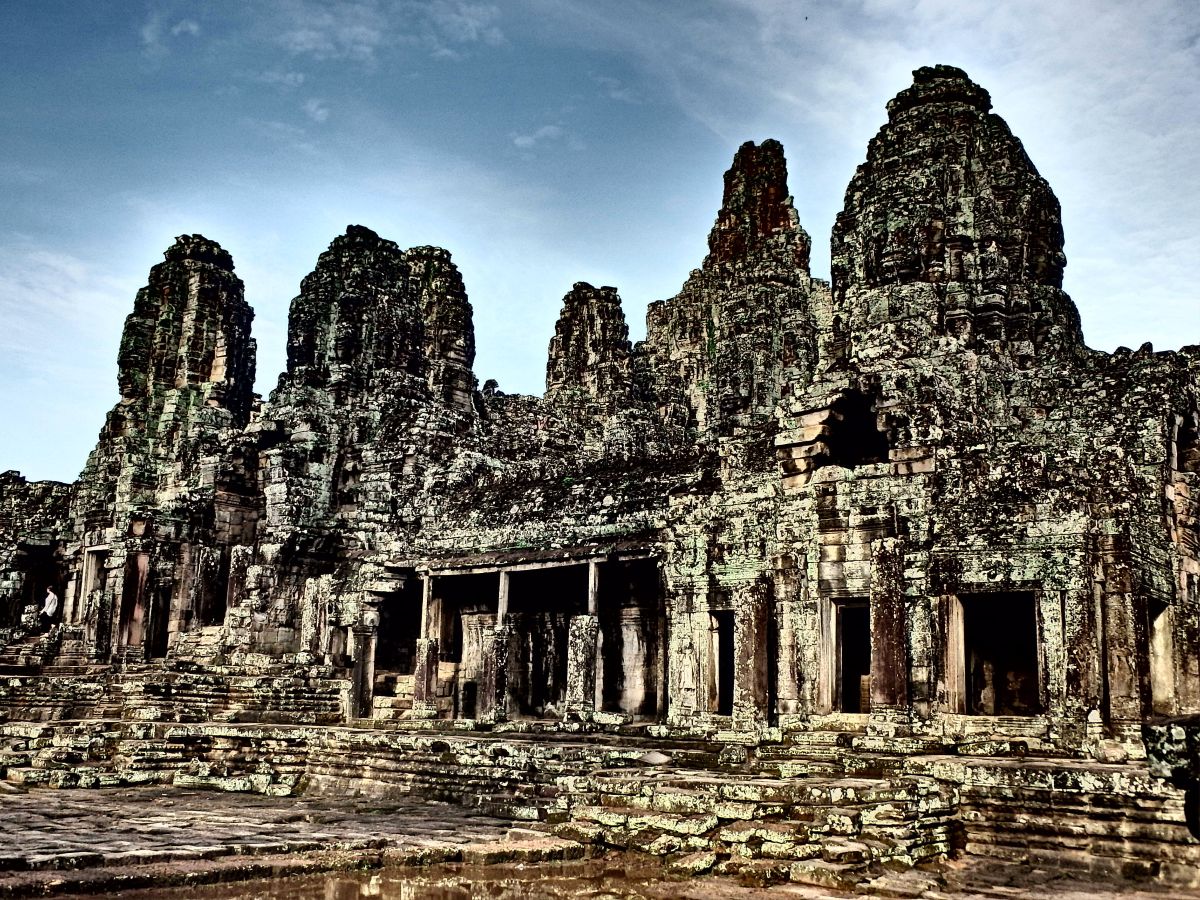
Angkor Wat is part of a magnificent temple complex (commonly known as the Angkor Archaeological Park) in Cambodia. It is one of the most significant archaeological sites in Southeast Asia and a symbol of national pride for Cambodia. Interestingly, it’s also classed as the largest religious site in the world!
And even though a lot of people mix up Angkor and Angkor Wat, they’re not quite the same thing. Angkor is a huge temple complex with hundreds of temples and monuments, while Angkor Wat is just one part of it – a walled area that includes the famous three-towered structure.
My husband and I have visited Angkor Archaeological Park twice and were left in awe both times – wandering around this huge site and admiring the beautiful temples was quite a spiritual experience. I can’t explain it, but I just felt at peace the entire time (despite the crowds). Yep, this UNESCO World Heritage Site sure does attract a lot of people – over 2.5 million tourists visit Angkor Wat each year.
And when you visit for yourself, you’ll understand why it’s so popular!
So, let’s get started – in this blog post, I will guide you through exactly what you can expect when visiting Angkor Wat.
Our experience visiting Angkor Wat
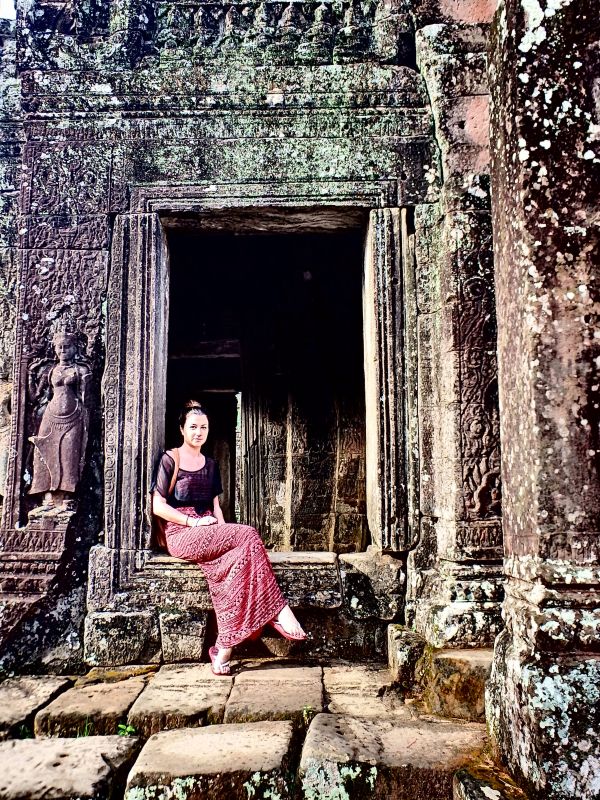
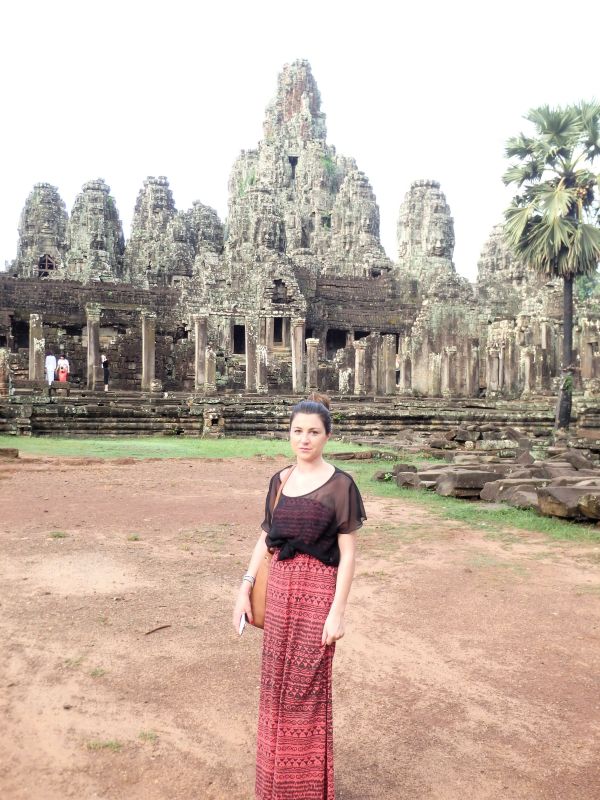
We’d heard (like everyone else) that an Angkor Wat sunrise is magical. The sun rises behind Angkor Wat, which in turn creates a stunning reflection in the pools in front. And we just knew that for our first visit to Angkor Wat, we had to experience this magic for ourselves.
Now, I will add that despite the early wake-up call, this is an extremely popular time to visit Angkor Wat. And you will likely come across large crowds at the West Gate (the main entrance) – so be prepared to share this moment with hundreds of other tourists. It was still worth it to us, though.
The tour we booked:
So, we booked a sunrise guided tour that collected us from our accommodation in Siem Reap and brought us to Angkor Park. It was a small group tour (around 10 other people were in our group), and our guide was so friendly and knowledgeable. Overall, it was a very personalized experience, which we love.

It was a super-early wake-up call for us, which I’ll admit I wasn’t keen on. We were collected from our hotel around 4:30 am and were at the entrance gate around 5 am. The sunrise was lovely, but it was quite cloudy the morning we visited, so our photos didn’t turn out as epic as we hoped.
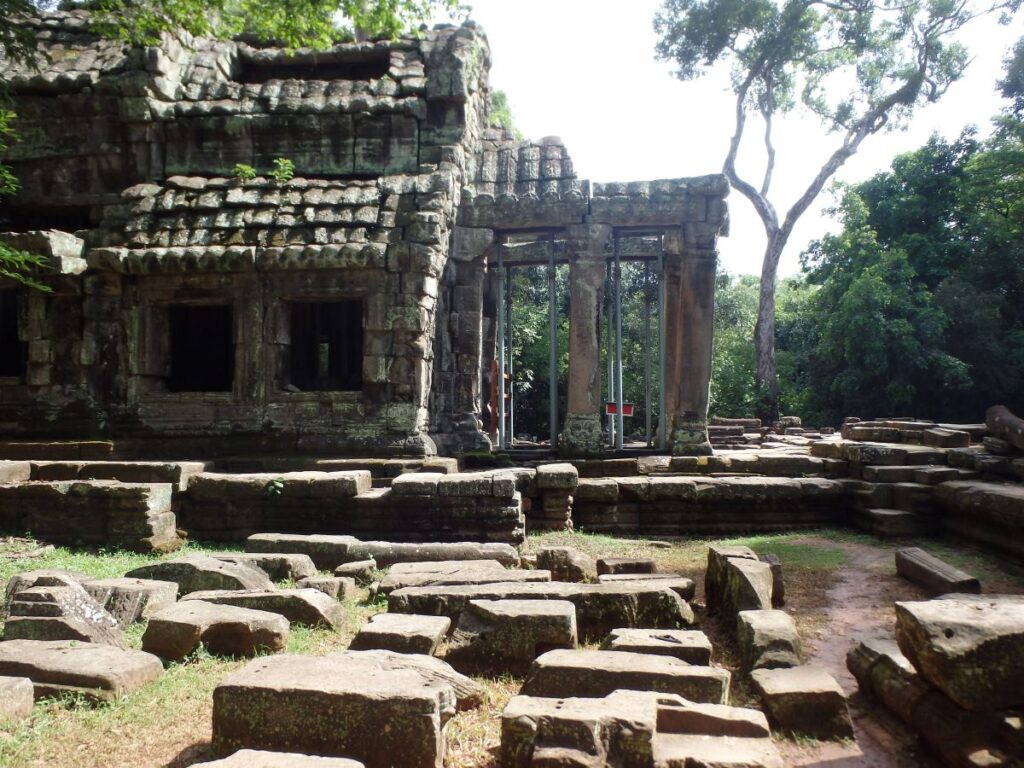
After watching the sunrise, we spent around an hour exploring Angkor Wat (as it was the only temple open at that time). And then we headed to the other side of the park (where it was quiet) to explore the temples there (Preah Khan and Ta Prohm) in peace before making our way slowly back to Angkor Thom.
We spent around 7 hours here, and I’ll admit we were getting tired by the end, as we were up so early.
Why visit Angkor Wat?

As I said, we’ve visited Angkor Wat twice now – the first time with a local guide, and on our second visit, we decided to DIY it as we were already fairly familiar with the site.
Both times we were super-impressed by the entire Angkor Archaeological Park, I felt like I was walking through a movie set (as you may know, Tomb Raider was filmed here). And the mysterious-looking temples and other structures are surprisingly well-preserved considering they are thousands of years old.
Yep, with its detailed carvings and towering spires set against Cambodia’s lush landscape, Angkor Archaeological Park sure is a visual feast. But beyond its beauty, it holds deep spiritual vibes, having started as a Hindu temple and later becoming a Buddhist site. And as you wander around, you’ll feel the spirituality. I’d best describe it as having a feeling of zen as you explore.
I also love how many of the temples mix Hindu and Buddhist art, a nod to the ancient city’s rich culture and history.
What is there to see at Angkor Archaeological Park?
Clearly, Angkor Wat is the shining star here, but Angkor Thom and Ta Prohm are also extremely popular. We both loved Preah Khan and Banteay Srei, so be sure to add those to your must-see list, too.
Please note that the site is huge – so if you’re not part of a guided tour, you’ll be doing a lot of walking. You can rent a bike near the entrance or in Siem Reap, which we saw others do to get around, if you wish.
Angkor Wat
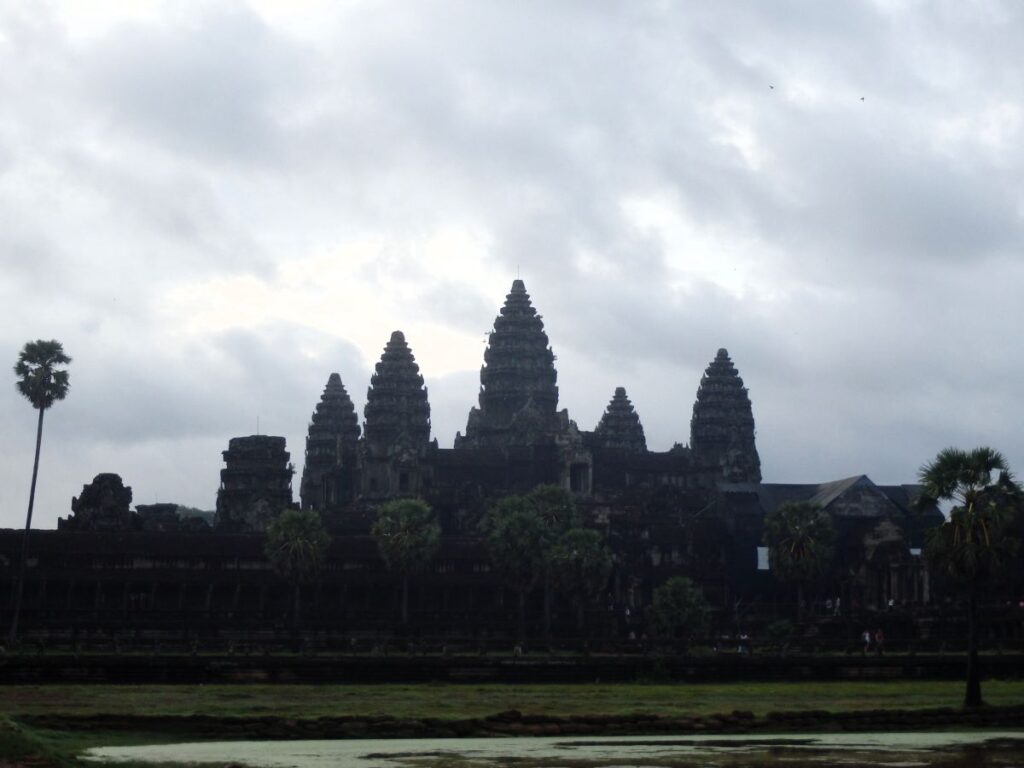
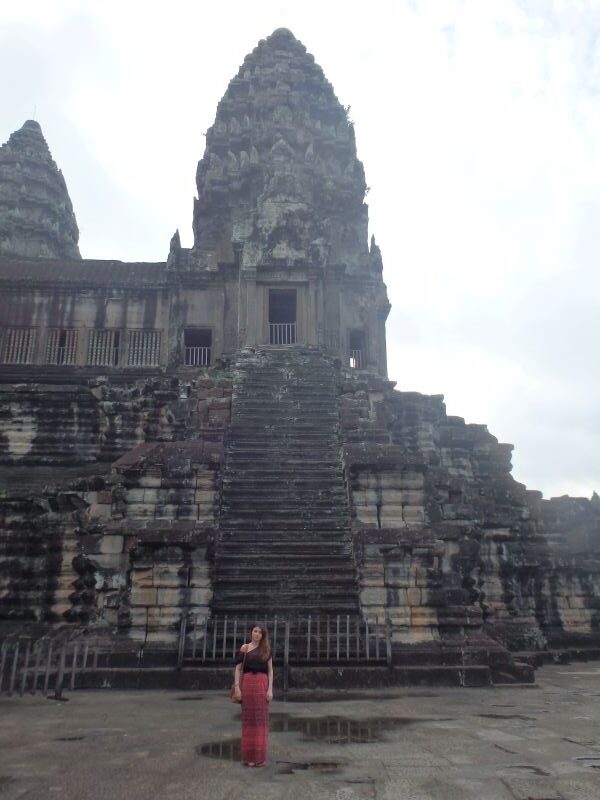
The crowning glory of the site is Angkor Wat. This ancient city is said to have been constructed in the early 12th century by the Khmer King Suryavarman II as a Hindu temple dedicated to the god Vishnu. And it gradually transformed into a Buddhist temple by the end of the 12th century.
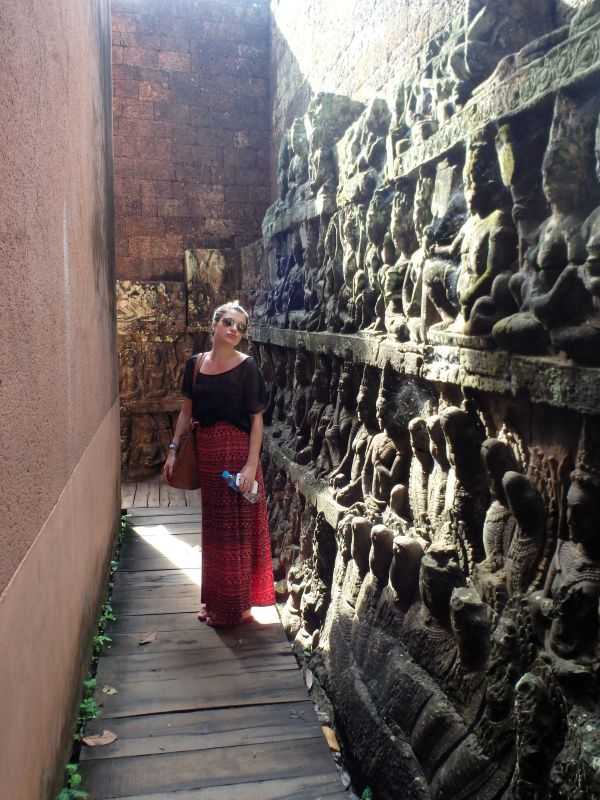
It is visually breathtaking with its intricate bas-reliefs (a type of carving), three spires, and how it combines elements of Khmer architecture with classical Hindu motifs. Surrounded by a vast moat and covering a massive area of over 162 hectares, Angkor Wat is most tourists’ highlight here.
Angkor Thom

Like Angkor Wat, Angkor Thom was essentially a smaller city within the city of Angkor. Interestingly, this walled city was the empire’s last and longest-lasting capital.
Covering over nine square kilometers, Angkor Thom is famous for its stunning architecture and detailed carvings, especially at the Bayon Temple, where you’ll see massive stone faces that are thought to represent the king or a bodhisattva (aka an awakened being on the path to Buddhahood).
This ancient city is surrounded by a huge square wall and a moat, and its gates are adorned with impressive statues and detailed bas-reliefs that tell stories of historical events and mythological tales.
Bayon

The main temple in Angkor Thom, Bayon, is famous for its mysterious smiling stone faces. The over 200 serene faces might represent the king or the bodhisattva Avalokiteshvara, and this is why the temple is nicknamed ‘The Temple of Faces’.
Ta Prohm
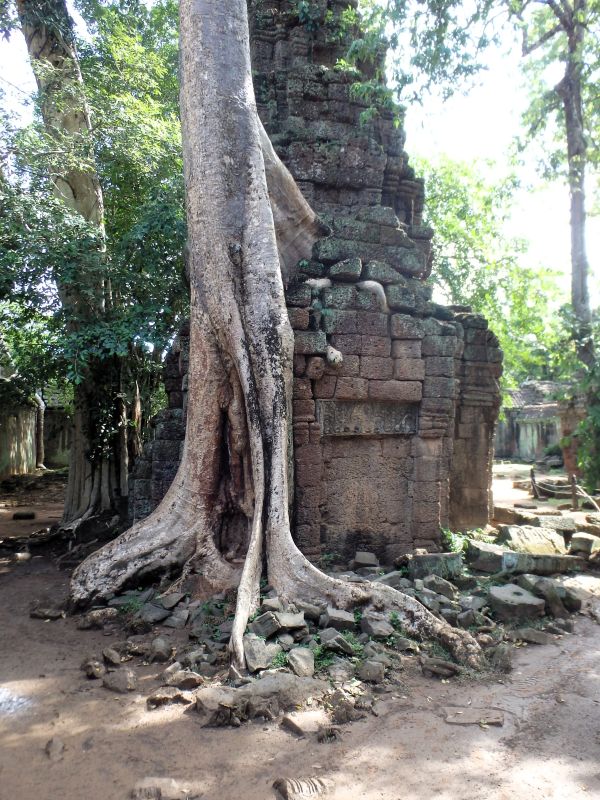
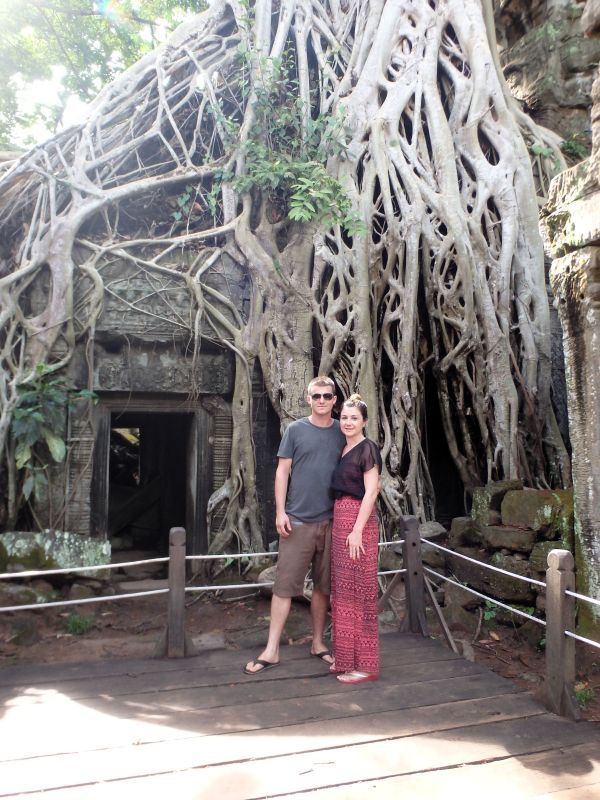
This is probably my favorite temple within the Angkor Archaeological Park!
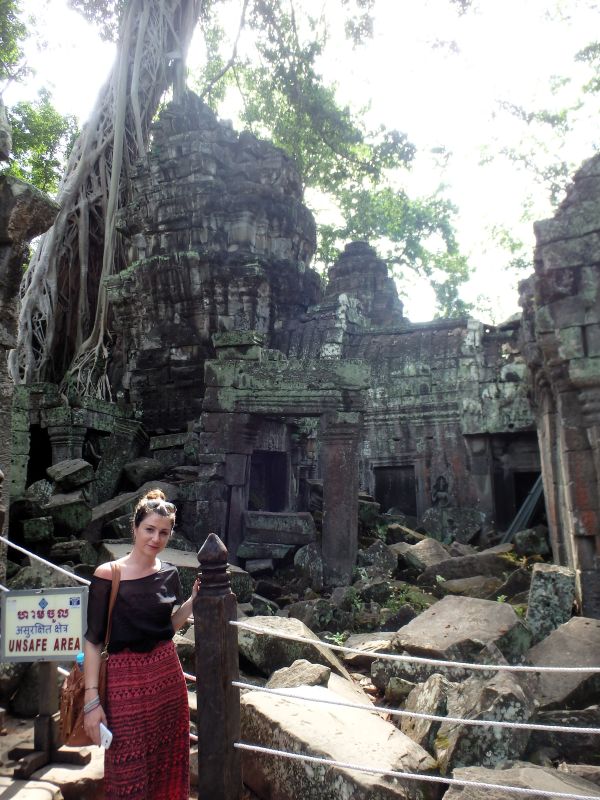
Ta Prohm was originally set up as a Buddhist monastery and university. What sets this temple apart from others in the Angkor complex is its enchanting state of semi-ruin, with massive tree roots intertwining with the stone structures, creating an ethereal and almost otherworldly atmosphere.
This unique interplay between the man-made and the natural world has made Ta Prohm a popular site for visitors and photographers alike, and you may recognize it from he movie “Lara Croft: Tomb Raider.”
Pre Rup

Characterized by its pyramid-like structure, the name Pre Rup means “turn the body,” and is believed to indicate its association with funerals/ burial, as it was possibly used for cremation ceremonies. Its layout follows the traditional quincunx pattern, with a central tower surrounded by four smaller towers, symbolizing Mount Meru and the surrounding mountain ranges of Hindu cosmology.
Preah Khan
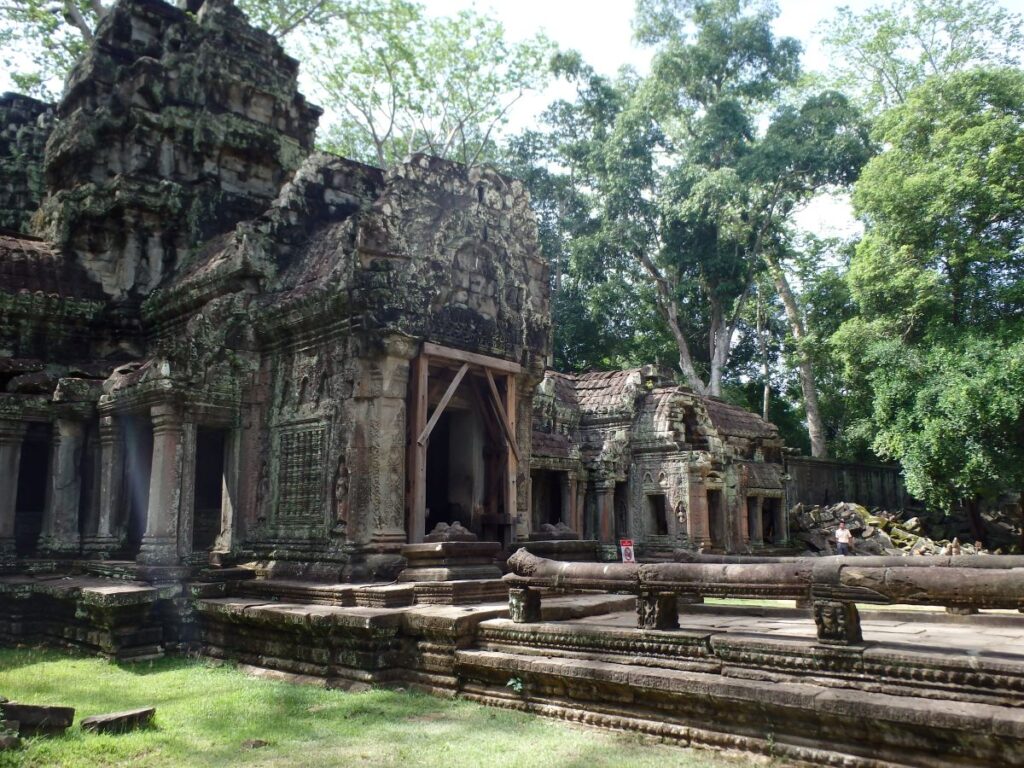
This temple once served as a monastery and as a university dedicated to the king’s father. The name means “Sacred Sword.” And unlike most other temples here, it remains largely untouched, with original structures strewn amidst the jungle. Known for intricate carvings, corridors and towering trees, this spot is not to be missed.
Banteay Srei
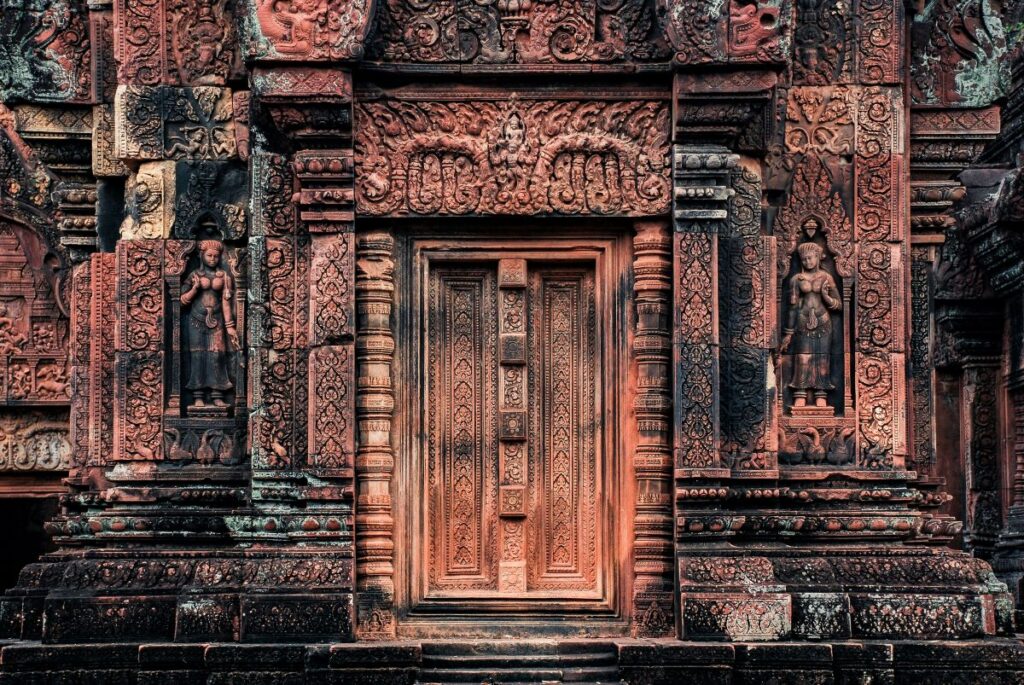
Often referred to as the “Citadel of Women” or “Citadel of Beauty,” this temple is dedicated to the Hindu god Shiva. It’s located around 25 km from the main Angkor Wat complex.
It’s a stand-out in the park thanks to its exquisite and intricate carvings, which show off the insane skills of ancient Khmer artisans. Its relatively small size and the pink hue of the sandstone add to its charm, too.
Terrace of the Elephants
This 350-metre-long viewing platform is adorned with intricate carvings of human and animal figures, prominently featuring elephants, which lend the balcony its name. It is thought that this platform was historically used for public ceremonies and functioned as the foundation for the King’s grand audience hall, where he would hear the grievances and concerns of his citizens.
How much does it cost to enter Angkor Wat?
Currently, the entrance fees for Angkor Wat and the surrounding Angkor Archaeological Park are as follows: a one-day pass costs $37, a three-day pass is $62, and a seven-day pass is $72. These tickets allow access to the entire park, including numerous temples and historical sites.
But, it’s important to note that these prices can change, so it’s a good idea to check the current rates before planning your visit.
How long do you need to visit Angkor Wat?
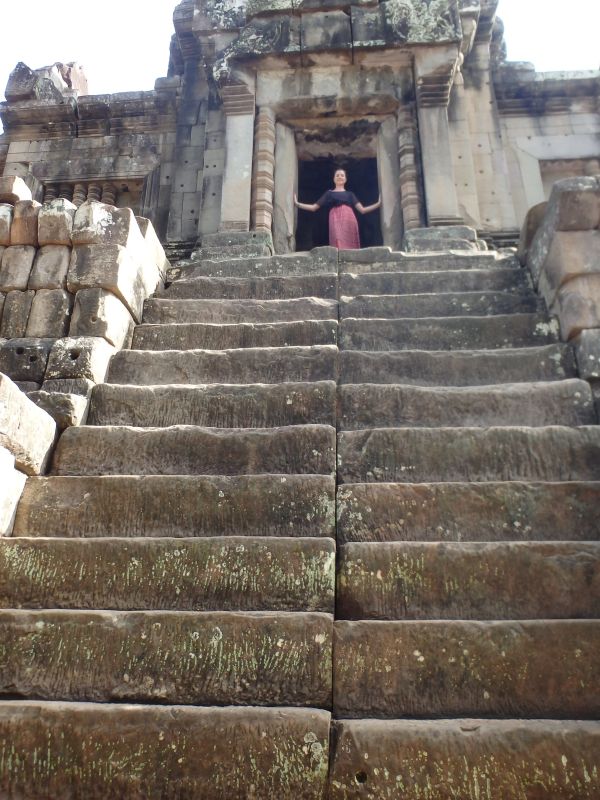
I would say that one full day (around 7 – 10 hours) is enough time for most people to see the top sights in the Angkor Archaeological Park. However, if you’re super-interested in history and/or want to see all of the huge site, then our guide told us that 3 days is a reasonable amount of time for Angkor.
What is the best way to see Angkor Wat?

I would suggest hiring a guide to explore Angkor Wat, as it’s so big and there’s so much to see that it can be quite an overwhelming experience. And having a knowledgeable guide on hand will enhance your visit by providing context and insights that might not be obvious to you.
Our guide was great – he told us the history of the city of Angkor and explained in detail what each temple was used for. This really helped us to better understand what life was like for the ancient Khmer people.
And I also found it helpful to have someone on hand to answer any questions I had.
Here are the best-rated guided tours of Angkor Wat:
- This sunrise small group tour, which is 8-9 hours long and costs just $15 USD per person. It has close to 4,000 excellent reviews and is super-popular! This is also the tour we did and can personally recommend it.
- This private tuk-tuk tour is another best-seller. It takes place in a tuk-tuk, so you can save your energy. It costs $21 USD.
What is the history of Angkor?
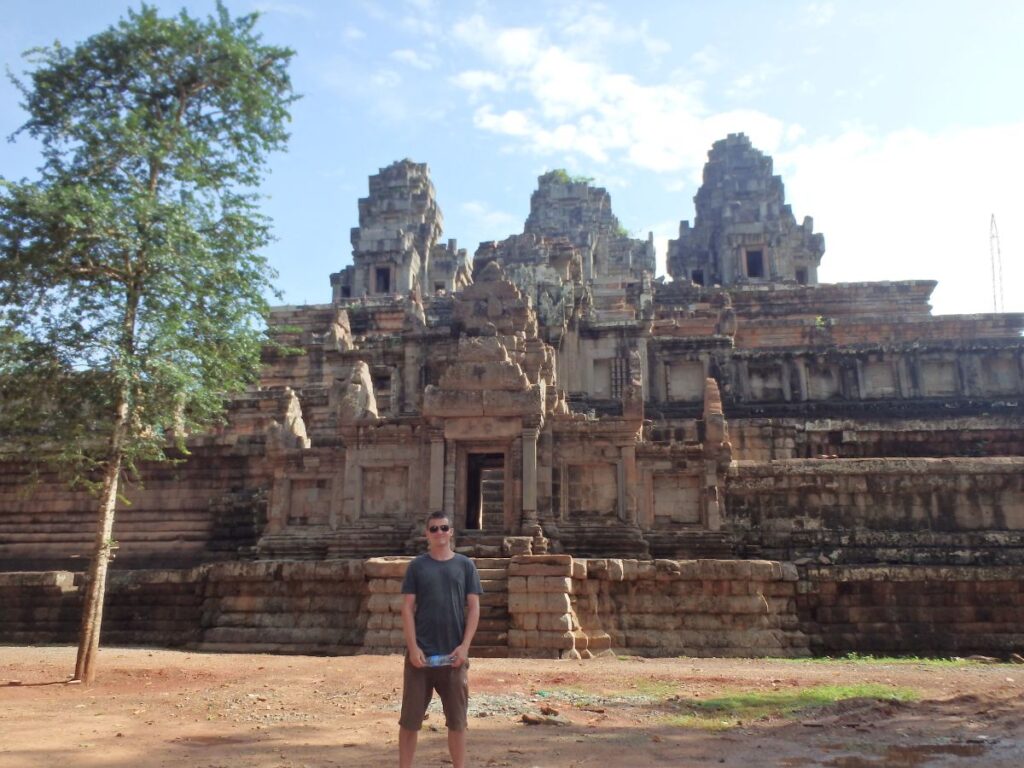
Angkor was the former capital city of the Khmer Empire, which took over most of Southeast Asia thousands of years ago. And it’s estimated that Angkor was home to close to one million people at its peak!
The city thrived between the 9th and the 15th centuries. And its development was marked by impressive architectural skill and sophisticated hydraulic engineering, and complex irrigation systems which supported a large population.
Angkor was also a vibrant center of culture, religion, and politics, and its locals were both Hindus and Buddhists.
However, by the 15th century, Angkor faced decline due to factors such as invasions, climate change, and shifts in trade routes. The city was eventually abandoned, leaving its magnificent ruins to be reclaimed by the jungle until their rediscovery in the 19th century.
Today, Angkor stands as a UNESCO World Heritage Site, a testament to the ingenuity and legacy of the Khmer civilization.

✨Our top tips for visiting Angkor Wat:
- Try to get here for sunrise, although it can be extremely busy, it’s so worth seeing the sun rise behind the temple.
- Pack enough bottled drinking water and sunscreen. Angkor Wat has a tropical climate, and it can get very hot here.
- Remember, this is a religious site, so it’s very important to dress appropriately and cover your shoulders and knees.
- Try to visit in November or January if you prefer fewer crowds and want good weather.
- Angkor Archaeological Park is open from 5 am and closes at 6 pm daily. However, please note that the other temples (besides Angkor Wat and Pre Rup) don’t open until around 7:30 am.
Where to Stay for Angkor Wat
We stayed at the Embassy Angkor Resort and Spa in Siem Reap and really rate it. This luxurious 5-star hotel has a huge outdoor pool, an excellent on-site restaurant, and our room had a balcony and was tastefully decorated. We paid around $100 USD per night.
A good budget option in Siem Reap is Siemreap Vasinh Residence, which has excellent reviews and costs just $20 USD per night.
Getting to Angkor Wat
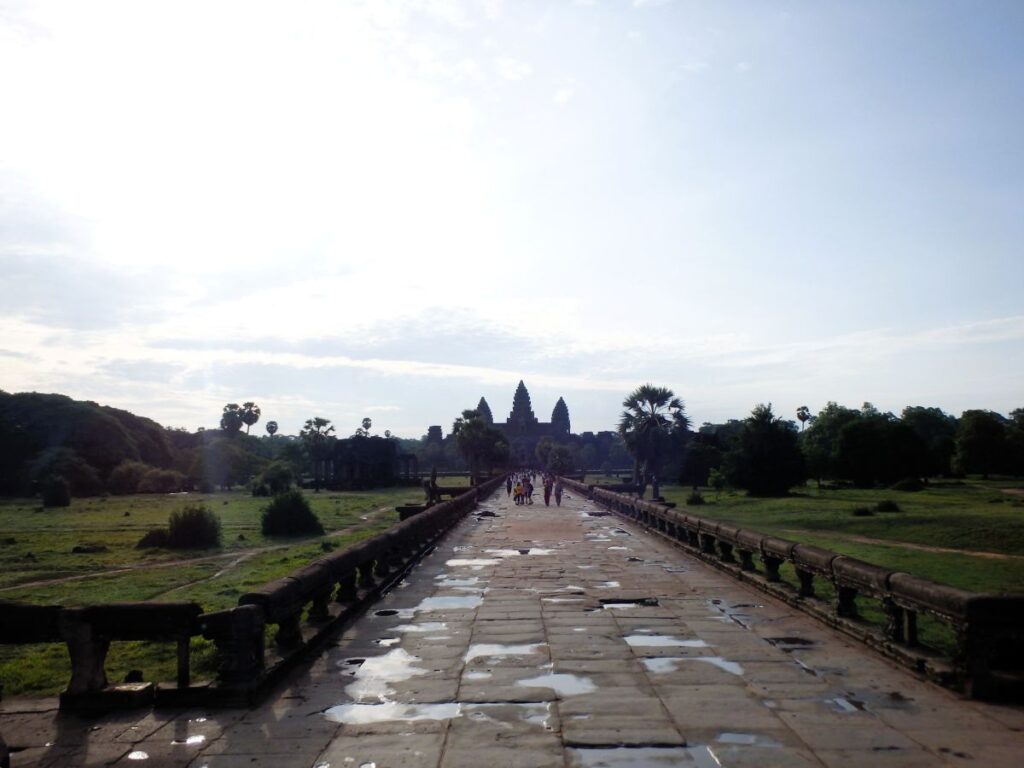
Siem Reap is the closest city to Angkor Wat – and it’s only a 15-minute drive from the Archaeological Park. There’s also an international airport in Siem Reap (called Siem Reap Angkor International Airport), which welcomes flights from across Asia and Australia.
Your best way to get to Angkor Archaeological Park is to book a guided tour that will pick you up from your hotel or grab a tuk-tuk or a taxi (which will cost just a few dollars). There is no bus service between Siem Reap and Angkor Wat.
What to pack for visiting Angkor Wat:

- I wore my Teva Hurricane Sandals here; they are so comfortable and have sturdy soles. And if you’re going to be hiking in the jungle/ spending longer here, then these Acrus boots from ArcTeryx are brilliantly rated, and they’re made from super material GORETEX.
- Comfortable, loose pants – I wish I’d worn my Sweaty Betty modal wide leg pants here instead of my maxi dress.
- Sunscreen and insect repellent is also a must!
- An eSIM, if you’re coming to Cambodia for longer than two weeks then getting an eSIM may come in handy. As that way, you won’t need to change your number or remove the physical SIM from your phone. They are so handy and cheap, too.
- Travel insurance is also a must when traveling around Southeast Asia – Travel insurance will provide you with coverage for a range of situations, including flight delays, canceled flights, injuries, illnesses, etc.
Thanks for Reading!
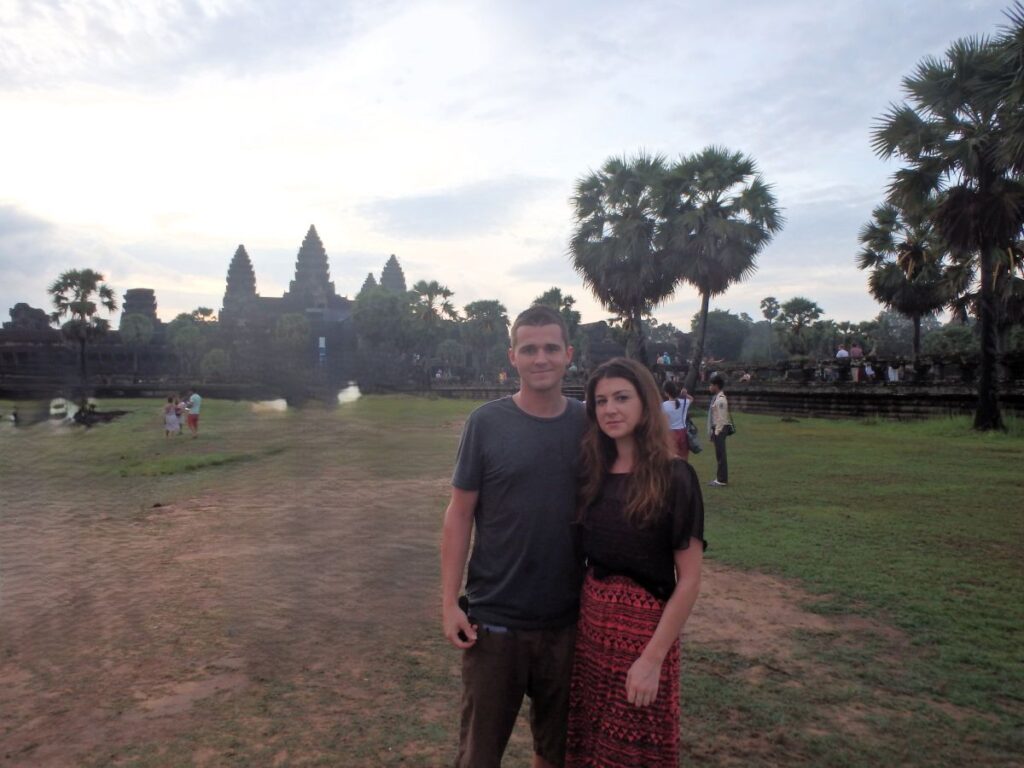
I hope you enjoyed reading my guide to visiting Angkor Wat. As I said, it’s one of my favorite historical sites in Asia – I just find it fascinating how well-preserved the site is. And honestly, you could easily spend a few days here and still not see it all.
You may also enjoy reading –
The Ultimate One Month Itinerary for Vietnam!
A Detailed 3 Day Itinerary For Exploring Hanoi, Vietnam
How To Spend 3 Days In Bangkok On A Budget: Affordable Options
Last Updated on November 25, 2025 by snaphappytravel